Twenty states have shown that open budgets and published records are essential for securing development finance.
On 30 June 2026, at a retreat of Commissioners, Permanent Secretaries and Directors of Budget and Planning in Abuja, the National Coordinator of the World Bank-supported Human Capital Opportunities for Prosperity and Equity Governance (HOPE-GOV) Programme, Dr Assad Hassan, announced that twenty Nigerian states would share $27 million in performance-based grants. The states earned the money by achieving the programme’s “Year Zero” Disbursement-Linked Results, a set of verifiable reform milestones in basic education, primary healthcare and public financial management, as confirmed by an Interim Independent Verification Agent.[1]
At the Centre for Fiscal Transparency and Public Integrity (CeFTPI), we welcomed this announcement. For five years, our Transparency and Integrity Index (TII) has checked if Nigerian public institutions, including all thirty-six state governments, publish their budgets, procurement records, audit reports, debt profiles, and citizen engagement channels as required by law.[2] We have always said these disclosures are not just formalities. They are building blocks of credible governance, public trust, and now, development financing.
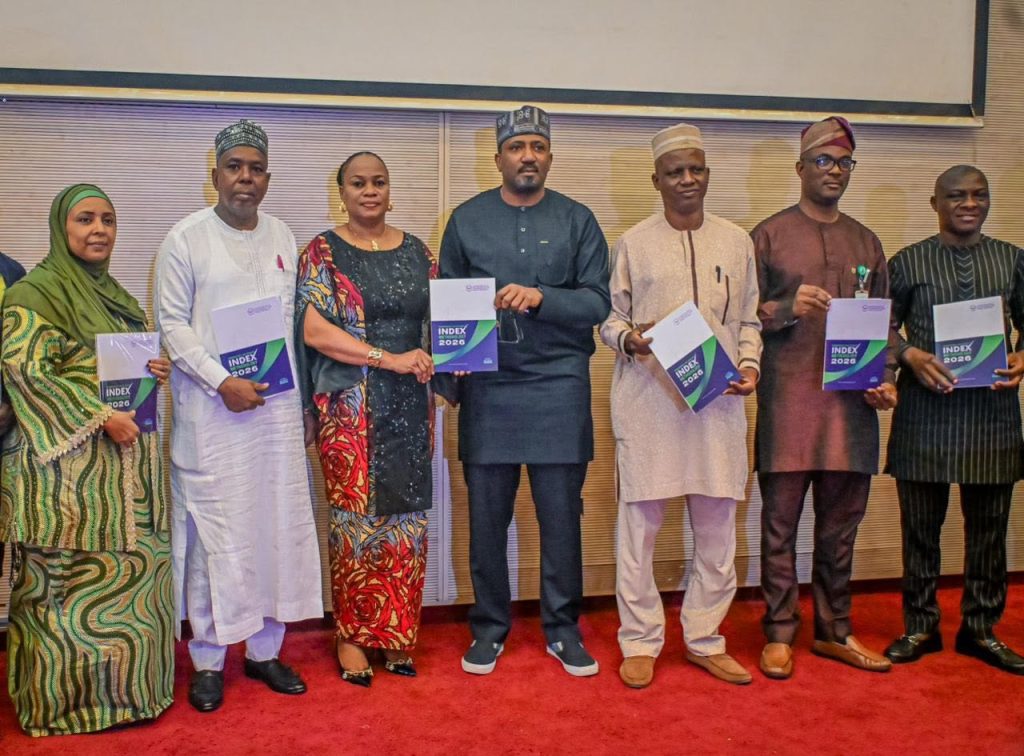
Image from our just concluded Transparency and Integrity Index (TII) 2026 methodology presentation held at Ministry of Finance, Abuja.
The HOPE-GOV disbursement clearly supports this view. States did not receive rewards for promises, press releases, or political goodwill.[3] Instead, they earned grants for proven, independently verified actions: adopting transparent planning guidelines, harmonising local government budgets, and especially publishing citizens’ budgets on official government websites by a set deadline. States that missed deadlines, did not meet the criteria, or failed to publish their results on their official websites received nothing.
Transparency is now more than a legal or moral duty; it is a valuable economic asset. This article examines what the World Bank grant involved, how its assessment aligns with our Transparency and Integrity Index, and why every Nigerian state, whether it qualified or not, should see the ongoing TII assessment as an opportunity to prepare for the new governance economy. Just as importantly, citizens are not just spectators in this process; they can become active participants. Citizens can use the Transparency and Integrity Index to check whether their state has published key documents such as budgets, audit reports, and procurement records, and then ask their state government for anything missing. By accessing official websites, attending public forums, and raising questions with relevant ministries, everyone can help drive the demand for transparency and keep momentum for reform alive.
Overview of the World Bank Performance-Based Grant
The HOPE-GOV Programme is a $500 million World Bank-supported initiative domiciled in the Federal Ministry of Budget and Economic Planning. Approved by the World Bank in September 2024, declared effective in September 2025, and formally launched into implementation in December 2025, the programme is designed to improve financial and human resource management in Nigeria’s basic education and primary healthcare sectors. Its architecture is instructive: $480 million is earmarked as Program-for-Results financing that incentivises states to achieve agreed reform milestones, while $20 million supports programme coordination, independent verification of results, monitoring and evaluation, and technical assistance to implementing agencies. All thirty-six states and the Federal Capital Territory expressed interest in participating.[4]
The programme’s three stated priorities are worth noting because each is, at its core, a transparency and accountability agenda:
- First, increasing and improving the utilisation of financing for basic education and primary healthcare, working with the Universal Basic Education Commission, the oversight structures of the Basic Health Care Provision Fund, and their state counterparts.
- Strengthening transparency and accountability in budgeting, budget reporting, and audit across the two sectors, which the National Coordinator described as public financial management.
- Strengthening the recruitment, deployment and retention of teachers and primary healthcare workers.
The $27 million announced in June 2026 rewards achievement of the Year Zero Disbursement-Linked Results (DLRs), verified independently before any funds were released. The breakdown, as announced by the programme, is as follows:
- Under DLR 2.1, which required states to adopt thorough guidelines for preparing and submitting consolidated work plans for basic education budgets, Bayelsa, Borno, Kano, Kebbi and Yobe each qualified for $1.5 million. The same five states earned an additional $1.5 million each under DLR 2.2 for adopting equivalent guidelines for consolidated primary healthcare work plans.
- Under DLR 2.3, which required local governments to adopt harmonised budget guidelines and a standard chart of accounts, nine states, Adamawa, Bayelsa, Borno, Delta, Gombe, Kano, Plateau, Taraba and Yobe qualified for $500,000 each.
Under DLR 4.1, which required the publication of the 2025 Citizens’ Budget for basic education and primary healthcare by 28 February 2025, fifteen states, Abia, Bayelsa, Borno, Edo, Ekiti, Enugu, Imo, Jigawa, Kano, Kebbi, Kogi, Nasarawa, Ondo, Plateau and Yobe, qualified for $500,000 each.
Two features of this exercise deserve emphasis. The first is that a small group of states Bayelsa, Borno, Kano and Yobe met the criteria across all four results areas, with Kebbi close behind. Performance was not random; it clustered around states that systematically approached the reform agenda. The second is the programme’s explanation for why other participating states were ineligible: they missed deadlines, failed to meet the required criteria, or did not publish their results on official state websites. For clarity, the sixteen states that did not qualify for any of the performance-based grants in this round are Akwa Ibom, Anambra, Benue, Bauchi, Cross River, Ebonyi, FCT, Kaduna, Katsina, Lagos, Niger, Ogun, Osun, Oyo, Rivers, and Sokoto. That final phrase should strike a chord with anyone familiar with our work, because publication on official government websites is precisely the standard against which the Transparency and Integrity Index has assessed Nigerian public institutions every year since 2021.
Understanding the Transparency and Integrity Index
The Centre pioneered the Transparency and Integrity Index in 2021 as a comprehensive, evidence-based assessment of public institutions’ compliance with principles of transparency, integrity, and open governance, drawn from Nigerian law and international commitments Nigeria has voluntarily made. Each year, we assess more than 500 national and subnational public institutions, including all 36 state governments, and present the findings on 28 September, the International Day for Universal Access to Information.
The Index is deliberately not a perception survey. It measures verifiable facts that ought to be in the public domain, principally on the official websites and portals of public institutions. The legal basis are explicit, the Constitution, the Freedom of Information Act 2011, the Fiscal Responsibility Act 2007, the Public Procurement Act 2007, Executive Order 001 of 2017, the National Anti-Corruption Strategy, the States Fiscal Transparency, Accountability and Sustainability (SFTAS) framework, and the Discrimination Against Persons with Disabilities (Prohibition) Act 2018 alongside international instruments including the United Nations Convention against Corruption, the African Union Convention on Preventing and Combating Corruption, the Open Government Partnership, Sustainable Development Goal 16 and standards associated with the World Bank itself.
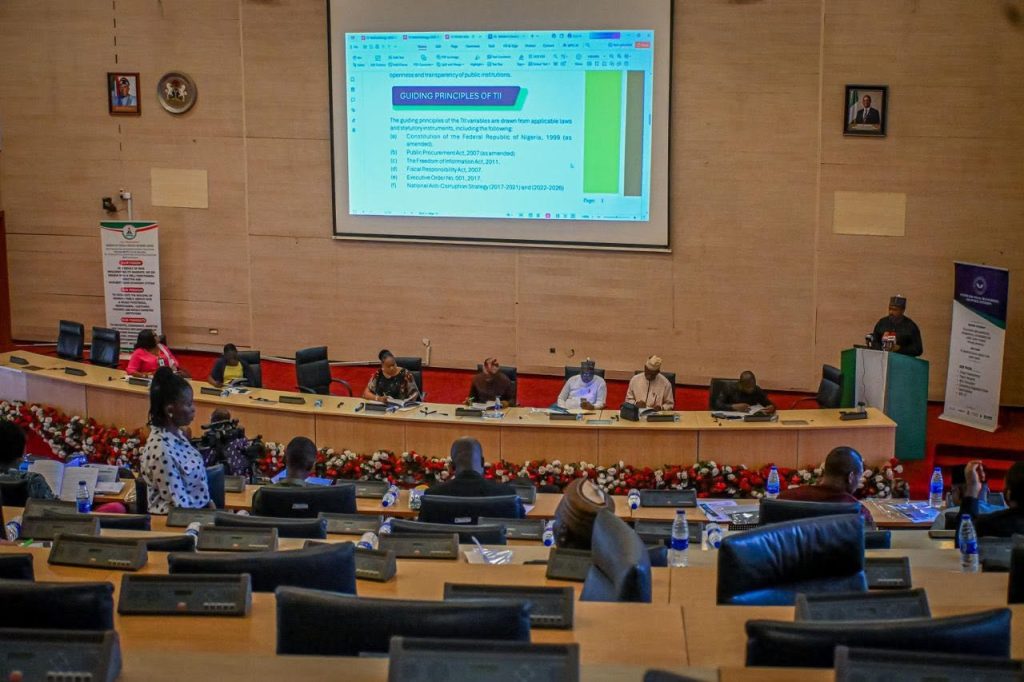
For state governments, the assessment is organised around five equally weighted variables, each accounting for twenty per cent of the total score:
- Fiscal Transparency examines whether a state publishes, on its official website, its budget appropriation acts, total allocations received, revenue generated, capital and recurrent expenditure reports, budget implementation reports, Auditor-General’s reports, and its debt profiles to institutions and private entities, each tracked over a five-year window.
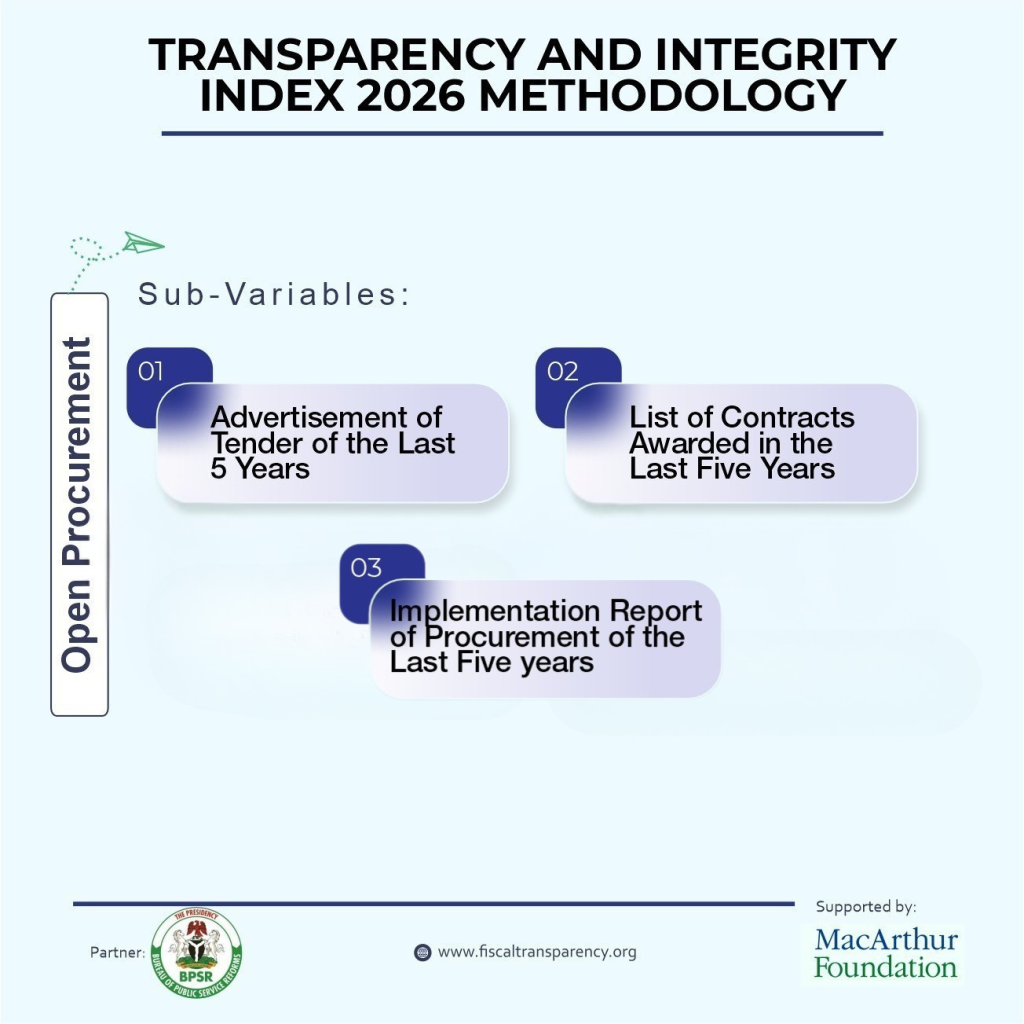
- Open Procurement evaluates whether the state publishes tender advertisements, detailed procurement records including contract status and contractor details, and procurement implementation reports.
- Human Resources and Inclusion examine the publication of recruitment information and policies, personnel numbers, promotion records, gender distribution, disability inclusion, and an updated organisational chart.
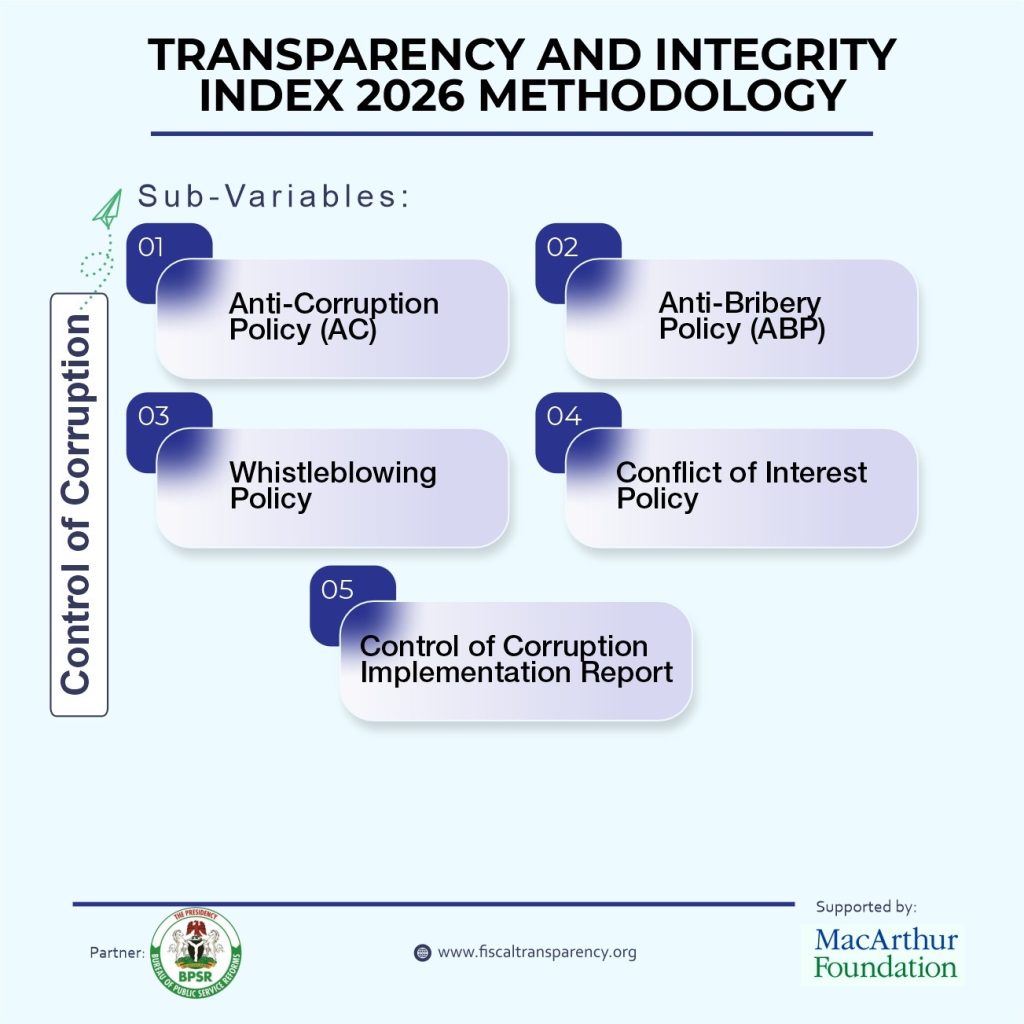
- Control of Corruption evaluates whether the state publishes anti-corruption, anti-bribery, whistleblowing and conflict-of-interest policies, together with implementation reports.
- Citizens’ Engagement evaluates whether the state provides functional channels for interaction, including town hall meetings, responsive institutional email, a social media presence, and published annual reports.
The philosophy behind the Index, as the Director of the MacArthur Foundation’s Africa Office observed in his foreword to our methodology, is not punitive. The TII is a mirror. It allows institutions to assess themselves against commitments the Nigerian government has already made, and to improve without external compulsion.
Where the World Bank’s Assessment and the TII Converge
The HOPE-GOV Programme and the Transparency and Integrity Index are separate initiatives with different sponsors, goals, and tools. Still, their approaches to governance have a lot in common and are worth comparing.
- Proactive publication as the test of compliance: HOPE-GOV’s DLR 4.1 did not ask states whether they had prepared a citizens’ budget; it asked whether they had published it, by a fixed date, in a form citizens could access. States that did the work but failed to publish on their official websites were treated as non-compliant. This is exactly the TII standard. Our fiscal transparency variable does not score intentions or internal documents; it scores what is verifiably available on the state’s official website. The convergence is not coincidental; both models recognise that information which citizens cannot see does not, for accountability purposes, exist.
- Citizens’ budgets and accessible fiscal information: The citizens’ budget, as required under DLR 4.1, is a simplified, plain-language presentation of public spending priorities. It is the same instrument family the TII has tracked under fiscal transparency and citizens’ engagement, and the same instrument promoted under the SFTAS framework from which our methodology explicitly draws. Fifteen states earned $500,000 each for doing something the TII has been measuring and promoting five consecutive assessment cycles.
- Budget credibility and implementation reporting: DLRs 2.1 and 2.2 rewarded states for adopting extensive guidelines for consolidated sector work plans, the machinery that links budgets to actual delivery. The TII’s insistence on published budget implementation reports, capital and recurrent expenditure reports, and Auditor-General’s reports serves the same end by ensuring that the budget is a credible, monitorable public commitment rather than an aspirational document.
- Independent verification and evidence-based assessment: HOPE-GOV releases no funds without confirmation by an Independent Verification Agent. The TII similarly relies on documented, replicable evidence rather than perception or self-report. These two frameworks embody the principle that governance claims must be testable.
- Human resource management: HOPE-GOV’s third pillar, transparent recruitment, deployment and retention of teachers and health workers, corresponds directly to the TII’s Human Resources and Inclusion variable, which assesses whether states publish recruitment information, recruitment policies, promotion records and workforce data.
- Digital government as the delivery channel: Running through both models is the assumption that the official government website is the primary vehicle of public accountability. TII has long assessed the functionality of state websites, institutional email responsiveness and interactive engagement tools. HOPE-GOV’s eligibility rules under which non-publication on official websites disqualified states have now attached a seven-figure price tag to the same standard.
The Accountability and Corruption Prevention Programme for Local Governments
Local government accountability is the point at which the HOPE-GOV reform agenda most directly meets service delivery. DLR 2.3 rewarded states for adopting harmonised local government budget guidelines and a standard chart of accounts, recognising that basic education, primary healthcare, sanitation, rural roads, markets, and other essential services are ultimately delivered closest to citizens at the local level. This corresponds to one of the Centre’s most significant recent workstreams: the Nigerian Local Government Integrity Index and the Local Government Accountability Framework, both of which proceed from the same premise that opacity at the grassroots undermines everything built above it.
The Accountability and Corruption Prevention Programme for Local Governments (ACCP-LG) and its monitoring mechanism give practical expression to that idea. Rather than relying on broad claims of transparency, the mechanism assesses governance quality, fiscal disclosure, citizen engagement, and corruption-prevention safeguards across Nigeria’s 774 local government areas. It asks whether specific records, policies, reports, and engagement channels are publicly available and functional, including approved budgets, implementation reports, procurement information, debt profiles, anti-corruption policies, and citizen feedback channels.
The ACCP-LG indicator ranking system therefore extends the logic of the Transparency and Integrity Index to the grassroots. Each local government is assessed across five equally weighted governance areas, each accounting for 20 per cent of the total score. This equal weighting prevents a council from appearing accountable simply by publishing one category of information while neglecting other areas that are equally important to integrity, service delivery, and public trust.
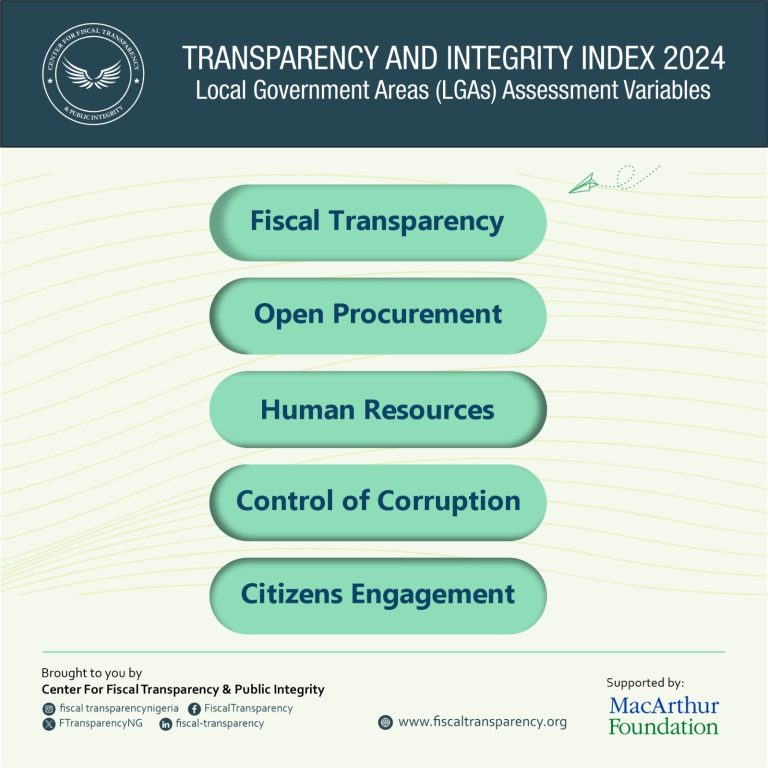
- Fiscal Transparency assesses whether the local government publishes core financial records such as the approved budget, allocation reports, internally generated revenue reports, capital and recurrent expenditure reports, audit reports, budget implementation reports, and debt profiles. This pillar answers the basic question: can citizens see where the money came from, how much was received, what it was meant for, and how it was spent?
- Open Procurement examines whether tender advertisements, procurement records, contract awards, contractor details, contract status, and procurement implementation reports are made public. This is crucial because procurement is one of the main channels through which public funds are converted into schools, clinics, roads, boreholes, markets, and other services. Openness in procurement helps reduce inflated contracts, abandoned projects, patronage, and diversion of funds.
- Human Resources reviews whether the local government publishes recruitment policies, staff numbers, sex distribution, disability inclusion information, and an updated organisational chart. Local governments cannot deliver services effectively if citizens do not know the administrative structure, the available workforce, or whether recruitment and deployment are guided by clear rules rather than political patronage.
- Control of Corruption checks for the existence and publication of anti-corruption, anti-bribery, whistleblowing, and conflict-of-interest policies, as well as implementation reports showing that these policies are not merely symbolic. This pillar is important because prevention is cheaper and more effective than investigation after funds have been lost. A council that clearly states its integrity rules, protects whistleblowers, and reports implementation is more likely to deter abuse before it occurs.
- Citizens Engagement measures whether the local government provides practical channels for residents to participate in governance, including town hall meetings, institutional email addresses, email responsiveness, social media accounts, and annual reports. This pillar recognises that transparency is incomplete without feedback. Information must move from government to citizens, but questions, complaints, and community priorities must also move from citizens back to government.
The ranking produced by this mechanism is not a beauty contest among councils; it is a diagnostic instrument. It shows which local governments have begun to institutionalise transparency, which ones are still operating in opacity, and which specific documents or practices are missing. For reform-minded chairpersons, it provides a practical checklist for improvement. For state governments, it offers a way to strengthen local administration without undermining local autonomy. For citizens and civil society, it converts accountability from a general demand into concrete questions: where is the budget, where is the procurement record, who got the contract, what was delivered, and how can residents raise concerns?
This is why DLR 2.3 is more than a technical budgeting requirement. It reinforces the same principle behind the Nigerian Local Government Integrity Index and the Local Government Accountability Framework: the right of local governments to receive and manage public resources must be matched by the duty to disclose, explain, engage, and prevent corruption. If local government autonomy is to improve service delivery, it must also deepen public accountability at the level where citizens experience government most directly.
Why Transparency Now Attracts Development Financing
The greater significance of the HOPE-GOV disbursement lies in what it reveals about the evolution of development finance. Traditional financing models transferred resources first and hoped for reform afterwards. Performance-based financing inverts the sequence: reform first, verification second, money third. Under this model, the quality of a state’s governance systems is no longer background context; it is the eligibility criterion itself.
This shift did not begin with HOPE-GOV. Nigerian states underwent it under the SFTAS Program-for-Results, which, between 2018 and 2022, disbursed grants contingent on verified fiscal transparency actions, including online budget publication and citizens’ budgets. HOPE-GOV extends the same logic into the human capital sectors, and the World Bank’s $480 million results envelope signals that far larger sums remain available to states that continue to perform. There is a more extensive pattern here as well: development partners, credit rating agencies, and even private investors increasingly rely on published, verifiable fiscal data when deciding where to allocate resources. A state that publishes credible budgets, audited accounts, and debt profiles reduces the due diligence burden and the perceived risk for anyone considering interacting with it.
The economics are compelling from the state’s perspective as well. The actions rewarded under Year Zero adopting planning guidelines, harmonising local budget formats, and publishing a citizens’ budget cost very little relative to the grants they unlocked. A state that published a citizens’ budget on time earned $500,000; the five states that met all the planning-guideline benchmarks earned $3 million or more each. Few investments available to the state government offer a comparable return. And unlike loans, these are performance grants that reward institutional behaviour states should be exhibiting anyway under their own laws.
Transparency has become an asset for economic growth and development. It reduces borrowing and partnership costs, opens access to special funding, and makes future progress easier. The opposite is also true. Lack of transparency now has a real cost. The 20 states that qualified will reinvest their grants in sectors where, as UNICEF reported in late 2024, about 70 per cent of Nigerian schools and 88 per cent of health facilities lack basic sanitation. States that did not qualify will have to address these gaps without extra resources.
Monitoring how these grants are used is just as important as earning them. The World Bank and its partners track disbursements through regular progress reports, third-party verification, and strict reporting requirements placed on state governments. However, transparency improves most when citizens and civil society groups are involved. People can visit state official websites to check for published updates on grant spending, project lists, and progress reports. Civil society can attend public budget forums, request records under the Freedom of Information Act, and compare reported expenses against field realities. By asking questions, demanding updates, and sharing findings, the public becomes an additional layer of oversight that encourages states to spend these funds as intended. When everyone helps track how grants are used, both transparency and impact increase.
Commending the High Performers
The Centre congratulates all 20 states that received grants, and we do so based on evidence, not just sentiment. Bayelsa, Borno, Kano, and Yobe met the verification standard in all four areas, and Kebbi qualified in three. This achievement is especially notable because some of these states face significant challenges, including insecurity, humanitarian issues, and limited resources. Their success shows that transparency reform is possible for any government willing to make the effort, not just for wealthy or peaceful states.
We also recognise Abia, Adamawa, Delta, Edo, Ekiti, Enugu, Gombe, Imo, Jigawa, Kogi, Nasarawa, Ondo, Plateau, and Taraba for reaching important milestones. Publishing a citizens’ budget by a set deadline, or guiding harmonised budget guidelines through local government systems, requires real coordination across ministries, departments, and agencies. These efforts not only improve each state’s chances of securing future grants but also boost the credibility of governance across Nigeria’s states.
To the states that did not qualify, our message remains the same as in every TII report since 2021: this is a diagnosis, not a condemnation. The programme coordinator highlighted the main issues: missed deadlines, unmet criteria, failure to publish on official websites, and weak coordination. All of these can be fixed. With the second phase of Year Zero verification ending in July 2026 and more programme years ahead, there are still opportunities. States that see this round as a lesson rather than a final judgment will have a better chance next time.
Why Every State Should Pay Attention to the Ongoing 2026 TII Assessment
Our 2026 Transparency and Integrity Index assessment is underway, and the report will be released in September, on the International Day for Universal Access to Information, as usual. We encourage every state government to use the coming weeks as an opportunity, for three practical reasons.
First, the TII is a leading indicator of readiness for performance-based financing. The disclosures our assessors look for published appropriation acts, budget implementation reports, audited accounts, debt profiles, procurement records, and citizens’ engagement channels are substantially the same artefacts that independent verification agents look for under programmes like HOPE-GOV. A state that scores well on the TII has, in effect, already assembled the evidence base needed to unlock results-based disbursements. A state that scores poorly has an early, low-cost warning of exactly where it will fail verification when real money is at stake.
Second, the TII is a locally developed, freely available roadmap. Our methodology is published, our indicators are drawn from laws Nigerian governments have already enacted and commitments they have already made, and our assessment requires no consultants or fees to act on. Any Commissioner of Budget and Planning can open our methodology handbook today, audit the state’s official website against the five variables and their sub-indicators, and produce a concrete workplan: upload the last five years of budget documents; publish the debt profile; post procurement records with contract status and contractor details; activate and answer the institutional email; publish the anti-corruption and whistleblowing policies; convene and document town hall engagements.
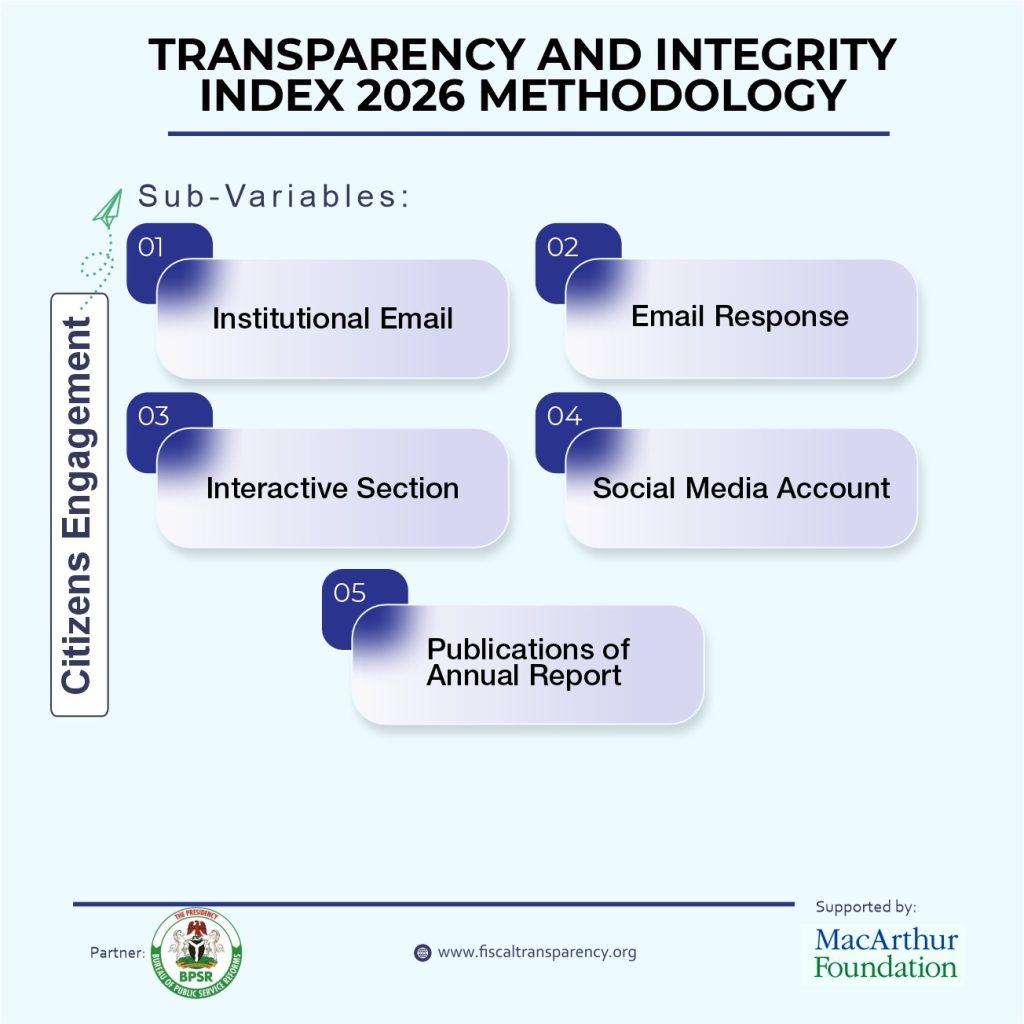
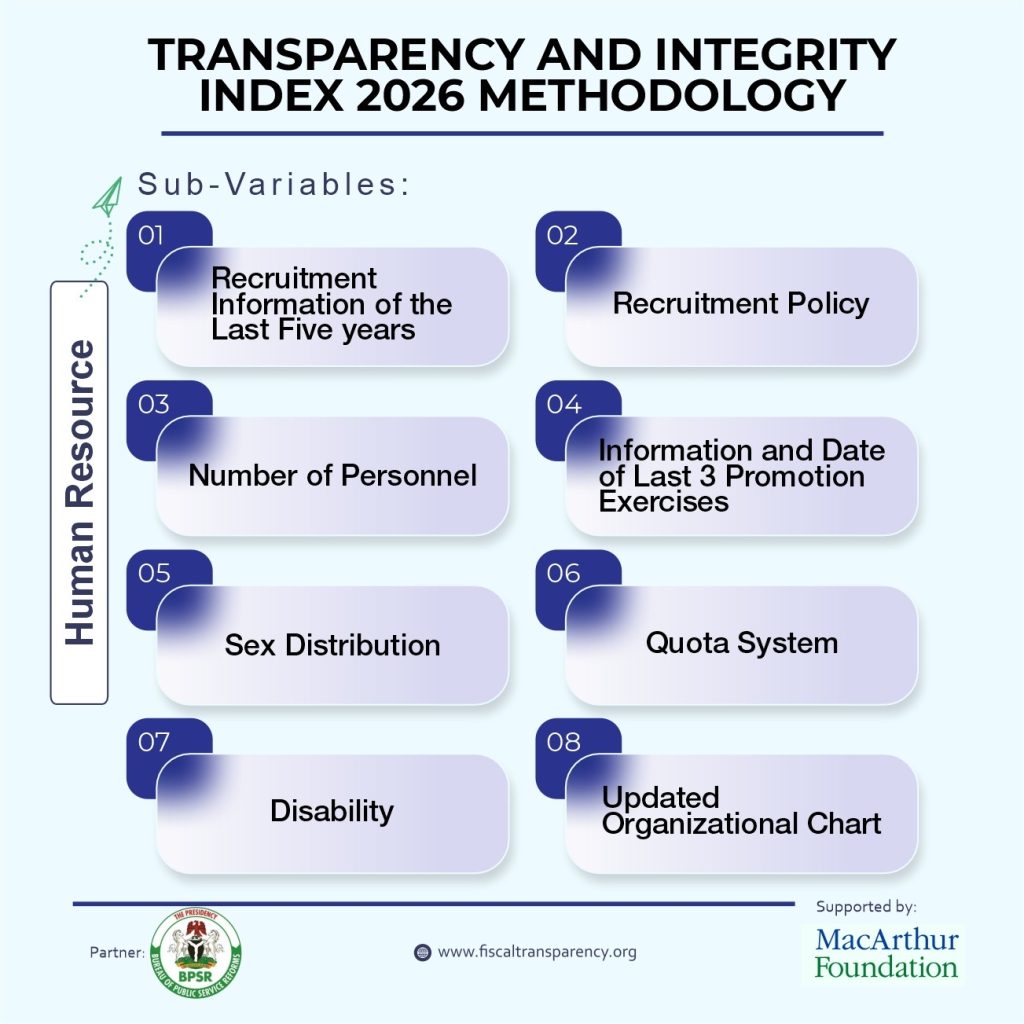
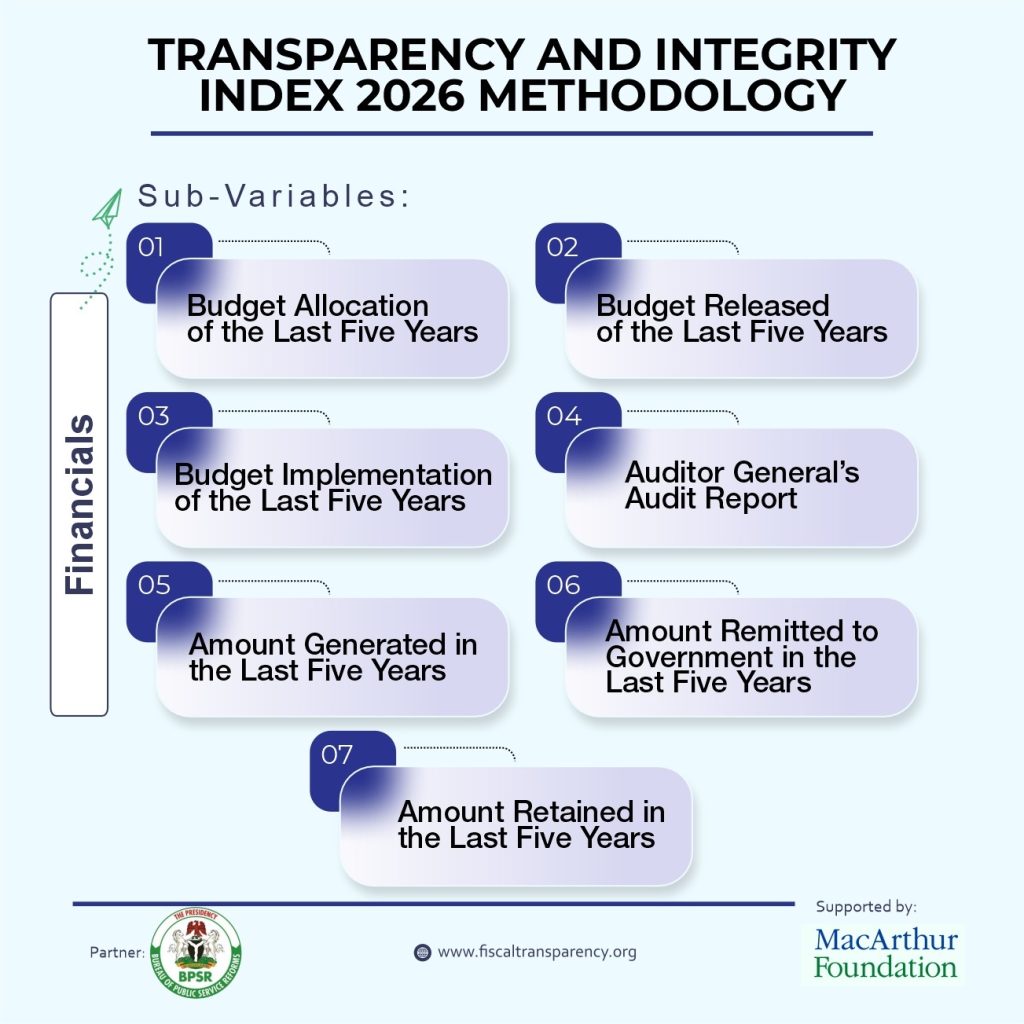
Third, the reputational stakes are rising. The TII report is read by citizens, journalists, civil society, and, increasingly, development partners. In a financing environment where performance is public and comparative, a strong TII trajectory is an asset a state can point to; a weak one invites the very questions verification agents ask.
Recommendations
- States should treat transparency as a development financing strategy. The HOPE-GOV disbursement shows that published records are no longer merely administrative requirements; they are conditions for accessing performance-based grants. State governments should therefore use the Transparency and Integrity Index as a practical readiness tool by ensuring that budgets, citizens’ budgets, implementation reports, audit reports, procurement records, debt profiles, and engagement channels are complete, up to date, and publicly available on official websites.
- States should strengthen deadline management and internal coordination for reform milestones. The states that qualified under HOPE-GOV did so because relevant ministries, departments, and agencies coordinated early enough to adopt guidelines, prepare required documents, and publish them within the prescribed timelines. Each state should establish a standing transparency and results-delivery team comprising officials from budget, finance, education, health, procurement, audit, debt management, and ICT to track requirements before verification deadlines.
- Local government accountability should be made a core part of state reform programmes. DLR 2.3 confirms that transparency at the local level is central to service delivery. States should support local governments to adopt harmonised budget guidelines and a standard chart of accounts, while also publishing approved budgets, allocation records, internally generated revenue reports, budget implementation reports, procurement information, debt profiles, anti-corruption policies, and citizen feedback channels. This recommendation directly reinforces the Nigerian Local Government Integrity Index, the Local Government Accountability Framework, and the ACCP-LG Monitoring Mechanism.
- Public institutions should improve the quality and usability of online disclosure. It is not enough for information to exist somewhere within government. Records should be uploaded to official websites in formats that citizens, journalists, civil society, development partners, and verification agents can easily find, download, compare, and use. Websites should be updated regularly, institutional emails should be functional, and public engagement channels should be responsive.
- Citizens, civil society, and the media should actively use published data to demand results. Transparency becomes meaningful when people use information to ask specific questions about spending, procurement, service delivery, and project implementation. Citizens and civic actors should track grant-funded activities, compare official reports with conditions in schools and health facilities, attend public forums, request missing documents, and use TII findings to hold both state and local governments accountable.
- Development partners should continue to link support to verifiable openness and institutional behaviour. The HOPE-GOV experience shows that performance-based financing can encourage reform when criteria are clear, independently verified, and publicly communicated. Future programmes should continue to reward proactive disclosure, credible reporting, citizen engagement, and anti-corruption safeguards, while giving states and local governments clear guidance on how to close identified gaps.
Conclusion
The HOPE-GOV disbursement may be small compared to Nigeria’s wider development needs, but its message is significant. It confirms what the Transparency and Integrity Index has consistently shown since 2021: openness can be measured, verified, and rewarded. Transparency is no longer only a legal or moral obligation; it is now a practical development asset that can improve access to funding, strengthen public trust, and support better service delivery.
For the states that qualified, the task is to sustain progress by investing the grants transparently in classrooms, clinics, and other priority services. For the states that did not qualify, the lesson is clear: the gaps are administrative and correctable. Publishing budgets, implementation reports, audit reports, procurement records, debt profiles, citizens’ budgets, and functional engagement channels can improve future eligibility for performance-based financing and strengthen each state’s standing in the TII assessment.
Citizens, civil society, and the media also have an important role to play. By checking official websites, requesting missing information, attending public forums, comparing published reports with field realities, and using the Transparency and Integrity Index to ask informed questions, the public can help turn disclosure into accountability.
As the Centre prepares to release the 2026 Transparency and Integrity Index report in September, every state still has an opportunity to improve. The most important outcome is not only a higher ranking or access to future grants, but stronger institutions that make public resources more visible, public officials more accountable, and public services more responsive to citizens.
References
Centre for Fiscal Transparency and Public Integrity. (2021). Transparency and Integrity Index 2021.
Centre for Fiscal Transparency and Public Integrity. (2025). Transparency and Integrity Methodology 2025.
Federal Republic of Nigeria. (2007a). Fiscal Responsibility Act, 2007.
Federal Republic of Nigeria. (2007b). Public Procurement Act, 2007.
Federal Republic of Nigeria. (2011). Freedom of Information Act, 2011.
Isser, D., & Zovighian, D. (2025). Fiscal governance reform in Nigeria: Lessons from the State Fiscal Transparency, Accountability and Sustainability Program. World Bank.
MacArthur Foundation. (2021, December 10). Transparency and integrity of Nigerian institutions.
Nairametrics. (2024, November 19). 70% of Nigerian schools and 88% of health facilities lack basic sanitation — UNICEF.
Nairametrics. (2026, June 30). World Bank to disburse $27 million to 20 Nigerian states in performance-based funding.
UNICEF Nigeria. (n.d.). Water, sanitation and hygiene.
Vanguard News. (2026, June 30). World Bank to reward top-performing states with $27m under HOPE Governance Programme.
World Bank. (2025, December 15). Nigeria’s path to fiscal transparency and accountability. Press release.
[1] Arise News (2026). World Bank Approves $27m Performance-Based Grants For 20 Nigerian States. https://www.arise.tv/world-bank-approves-27m-performance-based-grants-for-20-nigerian-states/
[2]. Transparency and Integrity Index Methodology (2026). https://www.fiscaltransparency.org/tii-2026/
[3] World Bank Group (2024). Nigeria – Human Capital Opportunities for Prosperity and Equity : Governance (HOPE-GOV) https://documents.worldbank.org/en/publication/documents-reports/documentdetail/099090924194515545
[4] Federal Ministry of Budget and Economic Planning (2026). FG, World Bank Implement $500 Million HOPE-Governance Program to Strengthen Basic Education and Primary Healthcare. https://nationalplanning.gov.ng/Bpg_info/30/FG–World-Bank-Implement–500-Million-HOPE-Governance-Program-to-Strengthen-Basic-Education-and-Primary-Healthcare