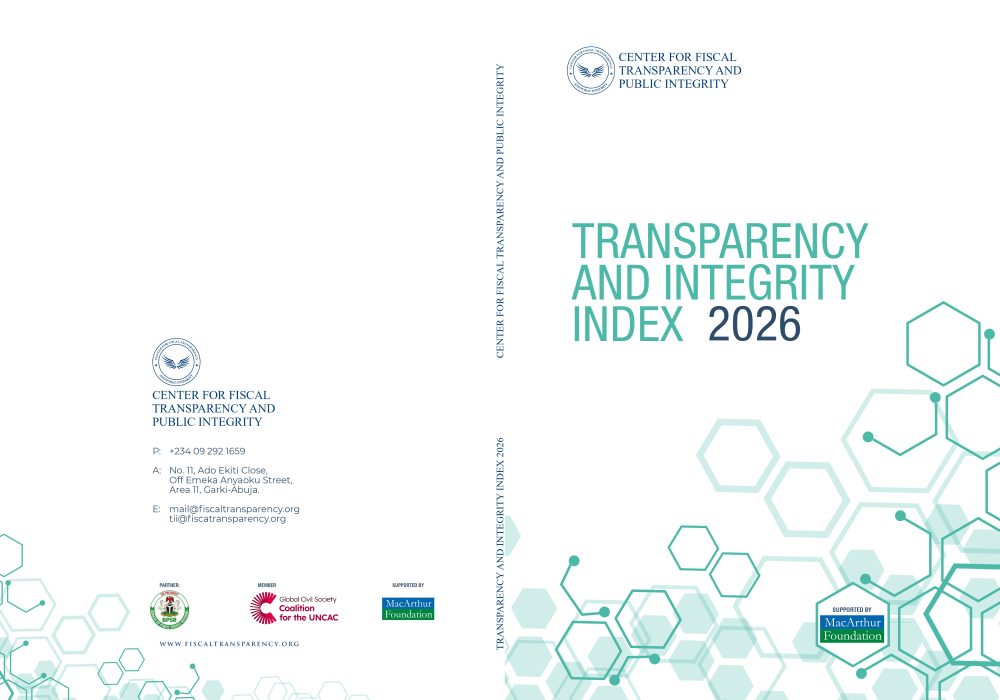
Only three of Nigeria’s 36 states scored above 45% in the 2026 Transparency and Integrity Index, while just four of the 518 assessed federal institutions reached the Excellent performance band. The Center for Fiscal Transparency and Public Integrity (CeFTPI), in collaboration with the Bureau of Public Service Reforms (BPSR), presented the findings at the Federal Ministry of Finance in Abuja.
Released to mark the International Day for Universal Access to Information on 28 September, the report underscores why credible government information matters: it enables citizens to participate in public affairs, monitor public institutions and demand accountability.
UNESCO’s 2026 theme, “Preserving the Integrity of Information in the Digital Age: The Role of Access to Information in Addressing Information Disorder,” highlights the importance of reliable official information, proactive disclosure and credible public data in maintaining a healthy information environment.
CeFTPI considers access to information fundamental to institutional integrity because citizens need timely, accessible and verifiable information to scrutinize public spending, procurement, recruitment, anti-corruption systems and government performance.
This emphasis on timely, accessible and verifiable public information also connects the Index to Nigeria’s commitments under Sustainable Development Goal 16, particularly the goal of building effective, accountable and inclusive institutions; the United Nations Convention against Corruption (UNCAC), the universal legally binding framework for preventing and combating corruption; and the Open Government Partnership (OGP), which advances transparency, citizen participation and public accountability.
Established in 2021, the TII provides an annual, evidence-based assessment of more than 500 federal and subnational public institutions, including Nigeria’s 36 state governments. The 2026 Index gives equal weight to five thematic areas: Fiscal Transparency; Open Procurement and Contracting; Human Resources and Inclusion; Control of Corruption; and Citizens’ Engagement.
The 2026 edition comes as public institutions face growing pressure to demonstrate governance results through evidence that citizens, oversight bodies and development partners can independently verify.
Four institutions reached the Excellent band of 70% and above. The Nigerian Investment Promotion Commission (NIPC) ranked first with 84.14%, followed by the Independent Corrupt Practices and Other Related Offences Commission (ICPC) with 80.13%, the Development Bank of Nigeria (DBN) with 78.43%, and the National Oil Spill Detection and Response Agency with 73.22%. At the other end of the ranking, Federal Polytechnic Kaltungo, Abuja Broadcasting Corporation, the Metallurgical Training Institute in Onitsha, and the Ministry of Youth and Sports Development each scored 0%.
Federal ministries averaged 13.65%, ranking tenth among the 12 sectors assessed. Financial institutions recorded the highest sector average at 39.83%, followed by the oil sector at 35.97%.
Kaduna ranked first among the states with 54.68%, followed by Osun with 50.54% and Kwara with 48.19%. These were the only three states to score above 45%. Niger State ranked last with 10.86%, while 15 of the 36 states scored below 25%.
In his opening address, BPSR Director-General Mr. Dasuki I. Arabi described the Index as developmental rather than punitive or a “name-and-shame” exercise. He urged MDAs and state governments to use the methodology handbook to identify disclosure gaps, designate transparency and data-disclosure focal persons, invest in digital infrastructure, and work with BPSR and CeFTPI before the next report is released.
In his keynote address, Secretary to the Government of the Federation Senator George Akume urged public institutions to treat transparency as “an institutional asset” and embed integrity in procedures that outlast changes in personnel. He called on institutions to incorporate the Index indicators into strategic plans and management meetings and to use the findings to guide budgeting, procurement, staff training and public communication. The report, he said, “should not sit on the shelf”; official websites and data portals should provide current budget, contract and service information.
Representatives of the Office of the National Security Adviser, the Centre for Democracy and Development, and the British High Commission reinforced the report’s central call for institutions to improve public disclosure, use the Index findings to guide reform and rebuild public trust.
In response to the findings, the Centers Executive Director, Dr Umar Yakubu, calls on governments and public institutions to take the following action:
i. Publish budgets, budget implementation reports, procurement records, audit reports, debt information and other statutory governance documents regularly;
ii. Publish public information in accessible, searchable and reusable formats, using clear labels and current data;
iii. Assign clear responsibility for coordinating transparency, data disclosure and performance reporting across each institution;
iv. Create regular channels for citizens to ask questions, provide feedback and receive documented institutional responses; and
v. Treat transparency and access to information as integral components of institutional performance rather than as administrative obligations.
The Center also calls on citizens, journalists, civil society organizations and researchers to use government disclosures and independent transparency assessments to ask informed questions, track institutional commitments and strengthen evidence-based public oversight.
The full Transparency and Integrity Index 2026 Report is available at https://www.fiscaltransparency.org/wp-content/uploads/2026/09/Transparency-and-Integrity-Index-TII-2026.pdf. For media enquiries, interviews or further information, please contact the Center for Fiscal Transparency and Public Integrity through its official communications channels.