
The Center for Fiscal Transparency and Public Integrity (CeFTPI), in collaboration with the Bureau of Public Service Reforms (BPSR), has officially unveiled the 2025 Transparency and Integrity Index (TII), an annual and data driven framework structured to evaluate and promote transparency, accountability, and good governance across Nigeria’s public institutions.
The event held in Abuja on the 30th of September 2025, marked another milestone in the Center’s commitment to strengthen institutional integrity, reinforce public trust, and advance the good governance in the country. It brought together representatives of federal institutions, civil society organizations, and the media.
The Director-General of Bureau of Public Service Reforms, Dr. D. I. Arabi in his opening address, emphasized the Index’s alignment with ongoing public service reforms, particularly in strengthening performance monitoring, institutional integrity, and service delivery within the public sector.
Strengthening Institutional Transparency and Reforms
The Transparency and Integrity Index (TII) was developed by the Center for Fiscal Transparency and Public Integrity’s to strengthen accountability through evidence-based evaluations of public sector transparency. Developed in partnership with BPSR, the Index assesses how Ministries, Departments, and Agencies (MDAs) adhere to established standards of good governance, financial accountability, and citizen engagement.
By assessing how public institutions manage information and resources, the Index serves as a strategic tool for institutional reform: highlighting areas of strength, identifying weaknesses, and encouraging sustainable improvement in governance.
At the unveiling, Dr. Umar Yakubu, Executive Director of the Center for Fiscal Transparency and Public Integrity (CeFTPI), reaffirmed the Center’s commitment to institutionalizing data-driven accountability mechanisms. He emphasized that the Transparency and Integrity Index is designed not to single out or criticize individual agencies, but to strengthen institutional systems, fostering a culture of transparency and sustained governance improvement.
The Five Key Variables for Evaluation
The 2025 Transparency and Integrity Index assesses MDAs across five thematic variables, reflecting the essential pillars of institutional transparency and ethical performance:
1. Financials: Evaluating budgetary disclosure, reporting practices, and fiscal control systems.
2. Open Procurement: Assessing the transparency, competitiveness, and accessibility of procurement processes.
3. Human Resource and Inclusion: Assessing inclusiveness, and integrity in personnel administration.
4. Control of Corruption: Tracking institutional mechanisms for preventing, detecting, and sanctioning corruption.
5. Citizen Engagement: Examining how agencies involve and respond to citizens in decision-making and feedback.
These variables collectively provide a comprehensive picture of how Nigerian public institutions uphold the principles of transparency and integrity.
Institutional Performance Overview
The 2025 edition evaluated over 517 public institutions and 36 states, offering one of the most extensive transparency assessments in the country’s public sector landscape.
- The National Oil Spill Detection and Response Agency (NOSDRA) emerged as the top-ranked institution, demonstrating significant progress in proactive disclosure, compliance reporting, and citizen engagement.
- The Independent Corrupt Practices and Other Related Offences Commission (ICPC) also performed strongly, ranking third overall, reflecting improvements in institutional ethics, digital transparency, and compliance mechanisms.
- Kaduna State topped the Transparency and Integrity Index State Ranking.
- Despite these improvements, the overall findings shows that a significant proportion of MDAs scored below average, particularly in areas relating to public disclosure of financials, citizen engagement and procurement transparency.
These results reaffirm the urgent need for systemic reform and continuous transparency advocacy across all levels of government.
Recommendations
Building on the findings of the 2025 Index, CeFTPI and BPSR outlined several key recommendations for sustaining momentum:
• Institutionalize Disclosure Mechanisms: Ensure MDAs routinely publish budgets, procurement data, and performance reports to build public confidence.
• Strengthen Internal Oversight: Establish robust audit, ethics, and compliance systems to prevent mismanagement and abuse.
• Enhance Citizen Engagement: Develop inclusive feedback platforms and open data portals to facilitate meaningful engagement.
• Strengthen Institutional Collaboration through Learning/Training : Support underperforming institutions through benchmarking, knowledge exchange, and reform mentoring.
• Integrate Findings into Policy: Use TII results to inform government performance reviews, budget planning, and reform prioritization.
Conclusion
The Transparency and Integrity Index 2025 beyond serving as a ranking framework, is a catalyst for reform designed to help public institutions improve through data, evidence, and collaboration.
By shining light on institutional performance and encouraging transparency, the Index advances the collective vision of a transparent, accountable, efficient, and citizen-centered public service in Nigeria.



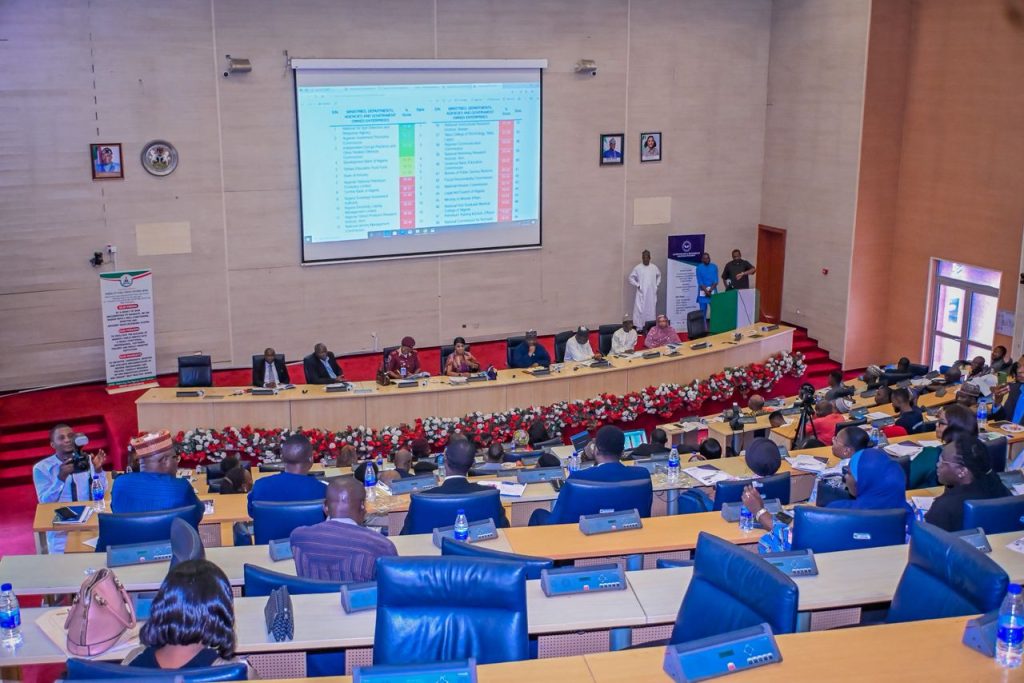






Images from Transparency and Integrity Index (2025)