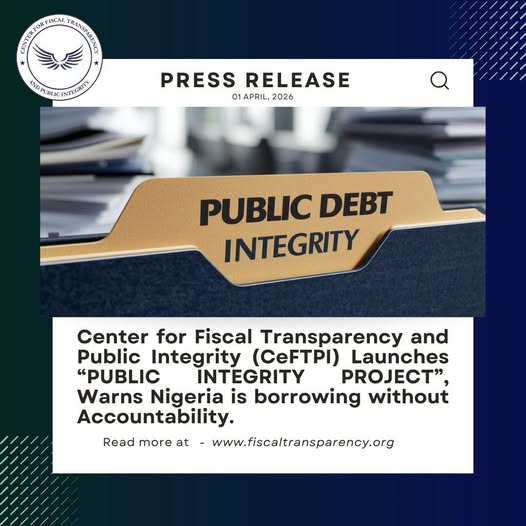
The Center for Fiscal Transparency and Public Integrity (CeFTPI), has launched a new initiative to tackle Nigeria’s growing public debt crisis, warning that the country is borrowing trillions of naira with little transparency or accountability.
Nigeria’s public debt has now risen above ₦149 trillion, yet many Nigerians see little evidence of the roads, hospitals, schools, or jobs these loans are meant to deliver. CeFTPI says this gap between borrowing and development results from weak oversight, secrecy, and poor enforcement of existing laws.
The new initiative, called the Public Debt Integrity (PDI) Project, seeks to change how government loans are approved, monitored, and used.
“Debt is not the enemy. Secrecy and efficient utilisation are,” said Umar Yakubu, Executive Director of CeFTPI. “Nigerians are being asked to repay massive loans without knowing the full terms, where the money went, or whether the projects delivered real value. Every naira borrowed must translate into visible benefits for citizens.”
Rising Debt, Little to Show
CeFTPI noted that Nigeria’s public debt has grown by more than 300 per cent in the past decade, but improvements in infrastructure and social services have not kept pace. According to the organisation, this “debt‑without‑development” problem is driven by a lack of openness in government borrowing and weak checks by oversight institutions.
The group also expressed concern that the National Assembly increasingly approves loan requests with limited scrutiny, while detailed reports on how borrowed funds are spent are rarely made public.
A Three‑Point Plan to Fix Nigeria’s Debt System
To address these problems, CeFTPI is calling for the adoption of a clear integrity framework built around three key pillars:
1. Stronger Parliamentary Oversight
CeFTPI is urging lawmakers to actively scrutinise all loan requests before approving them. This includes reviewing borrowing plans, questioning loan terms, and requiring regular reports from the Debt Management Office (DMO) on fund usage.
2. Better Debt Management Standards
The organisation plans to assess Nigeria’s debt management practices against international benchmarks to determine whether loans are properly recorded, legally approved, and aligned with national budget plans.
3. Real Enforcement and Sanctions
CeFTPI says transparency alone is not enough. It is calling on the Fiscal Responsibility Commission (FRC) to fully exercise its legal powers to investigate, audit, and sanction any public official found to have misused loan funds. This includes tracking debt‑funded projects from start to finish and publishing audit reports for public review.
The group is also advocating for tougher penalties under the law, including asset forfeiture and disqualification from public office for officials who mismanage public debt.
Tracking Projects Nigerians Can See
As part of the PDI Project, CeFTPI is proposing practical measures to ensure loans lead to real results. These include:
- Independent checks to confirm projects offer value for money before funds are released
- A public online dashboard showing the location, cost, and status of all debt‑funded projects
- Mandatory quarterly hearings where government agencies explain how loan funds are being spent
- Independent audits after projects are completed, with sanctions where failures or diversion are found
Aligning With Existing Laws
CeFTPI stressed that its demands are fully aligned with Nigeria’s existing legal framework, including the Public Finance Management Act 2024. However, the group warned that without active enforcement by oversight bodies, even strong laws risk becoming meaningless.
“We cannot keep borrowing without a plan, and we cannot plan without transparency,” Yakubu said. “Oversight agencies must stop being passive. The public deserves accountability with real consequences.”
Next Steps
As part of the project, CeFTPI announced it will:
- Publish an independent assessment of Nigeria’s debt management practices
- Formally petition the Fiscal Responsibility Commission to begin audits of major loans
- Convene lawmakers and policy experts to discuss stronger debt oversight
- Launch a public debt dashboard for citizens
- File Freedom of Information requests seeking full disclosure of loan agreements and spending records
CeFTPI called on civil society groups, journalists, and citizens to join the effort to ensure that Nigeria’s borrowing serves the public interest.
About CeFTPI
The Center for Fiscal Transparency and Public Integrity (CeFTPI) is a Nigerian non‑governmental organization focused on promoting transparency, accountability, and integrity in public finance management.
Umar Yakubu, Ph.D
Executive Director