32. The 761 Billion Naira Boulevard: An Infrastructural marvel best admired, not driven on.
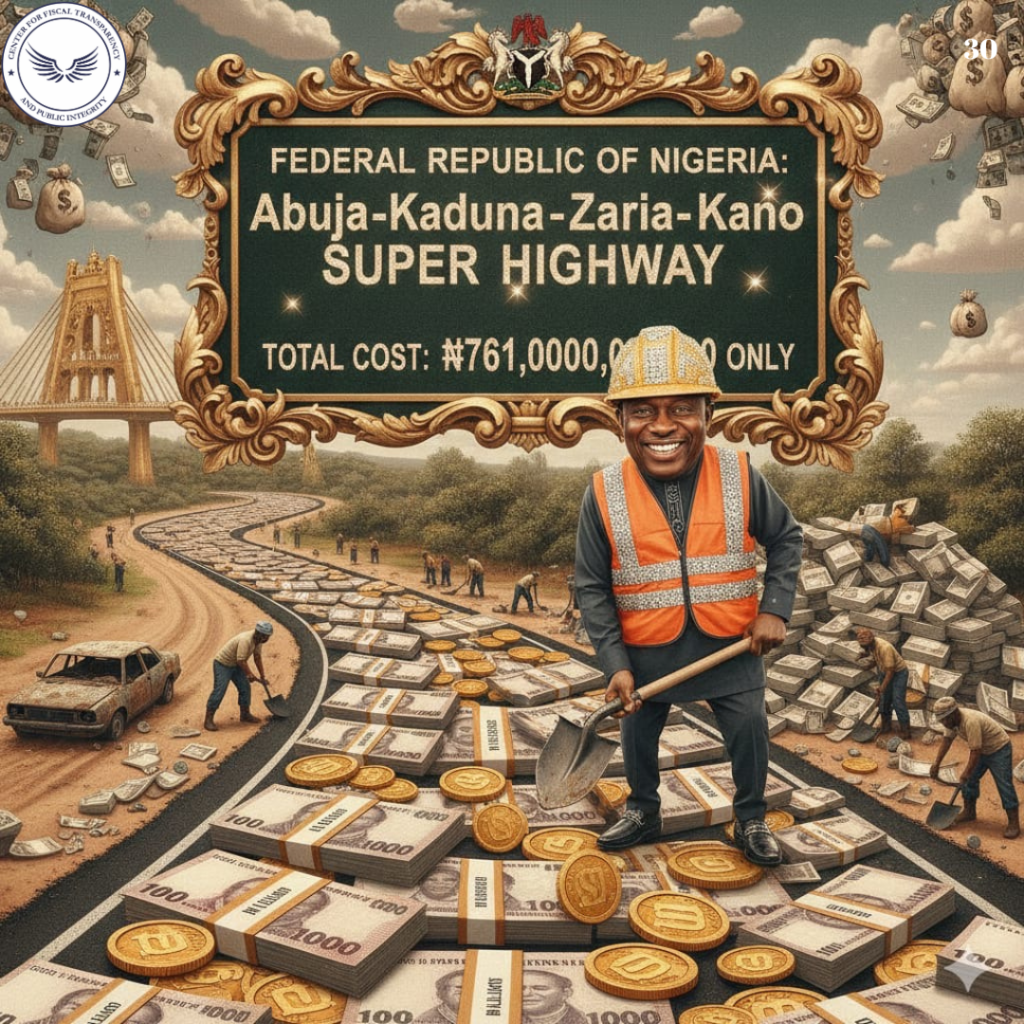
The Minister of Works assures us that for a mere N761 billion, this road will be so exquisitely paved, drivers will need to pay an extra toll just to admire its opulent smoothness, rather than actually drive on it.
Upon completion, the road will likely be declared a UNESCO World Heritage site, not for its historical significance, but for being the most expensive stretch of asphalt known to mankind.
31. The Great Nigerian Debt Pile-Up: An Assembly Line Production
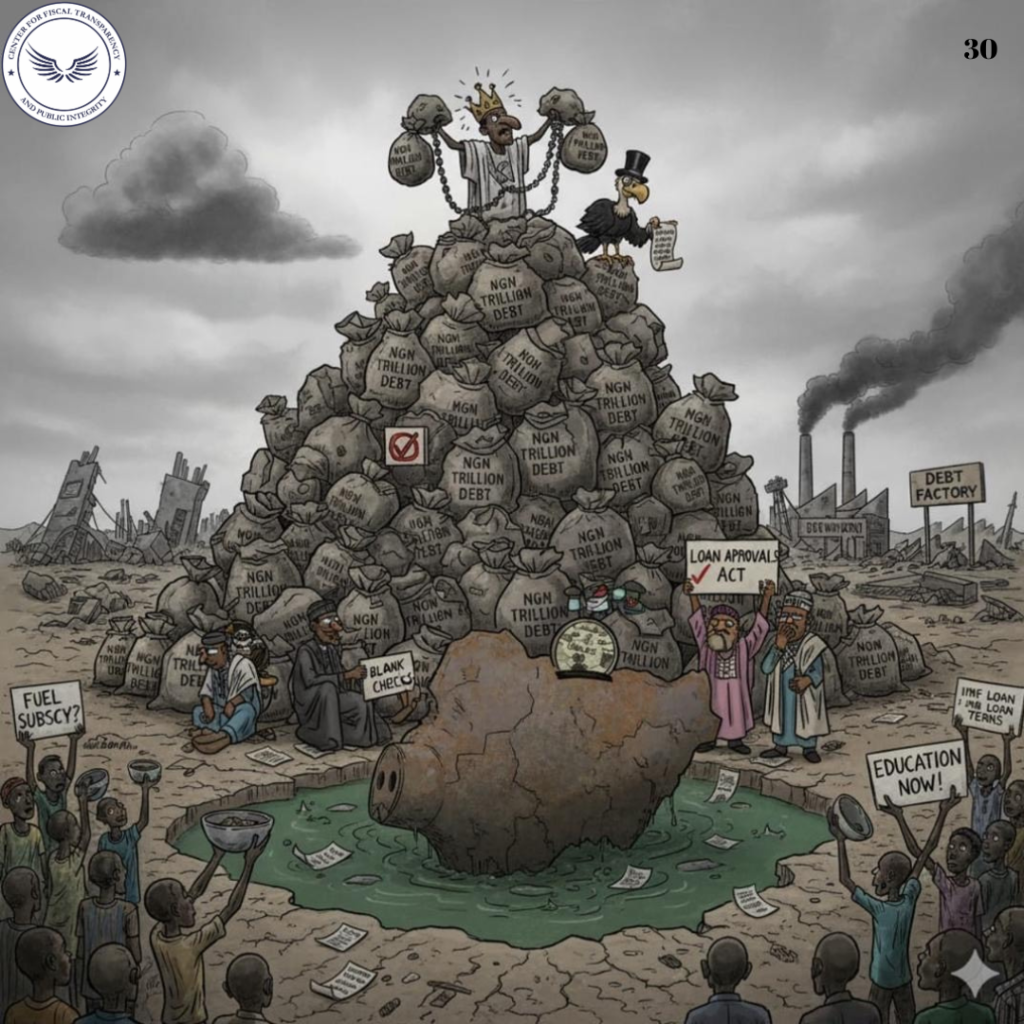
30. Spending Millions for boreholes, and tens of millions for Legislative SUVs.
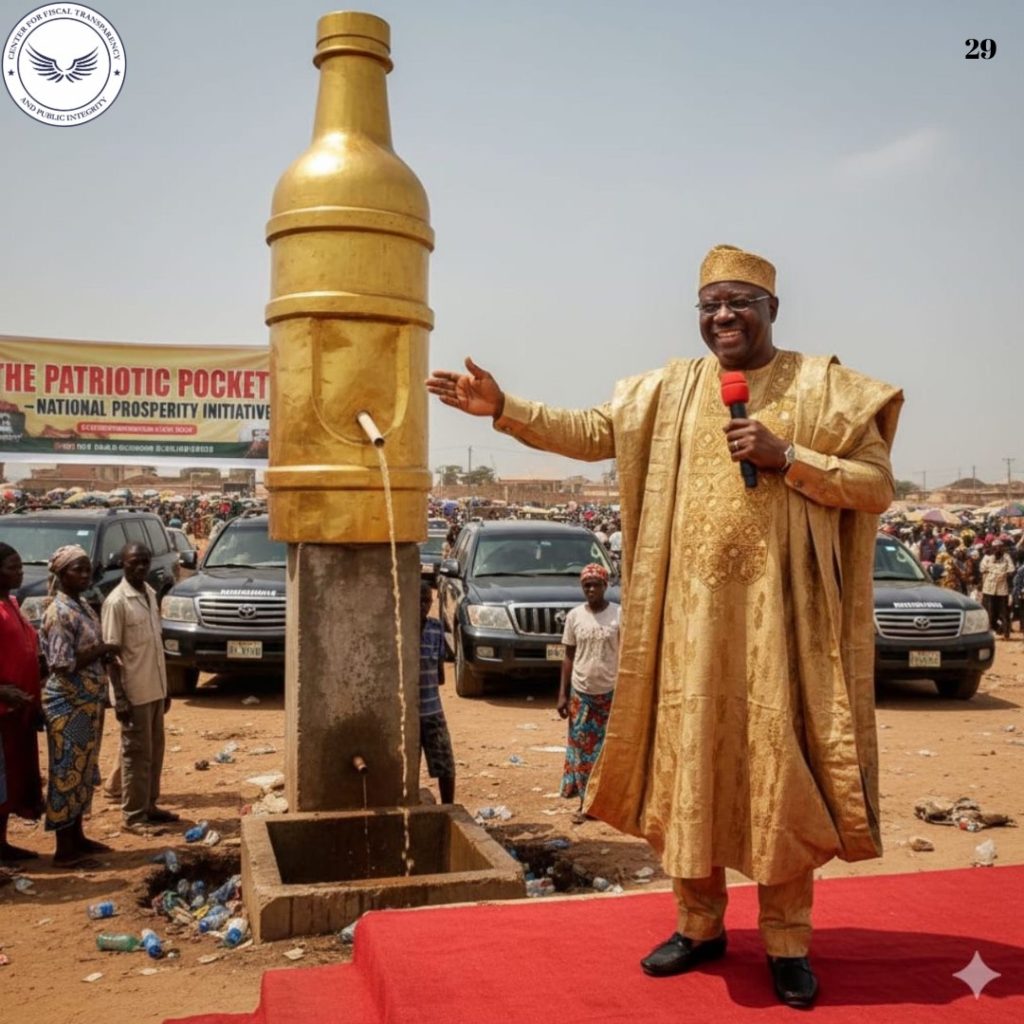
29. In Government, money can buy chieftaincy titles and praise singers but never Integrity.
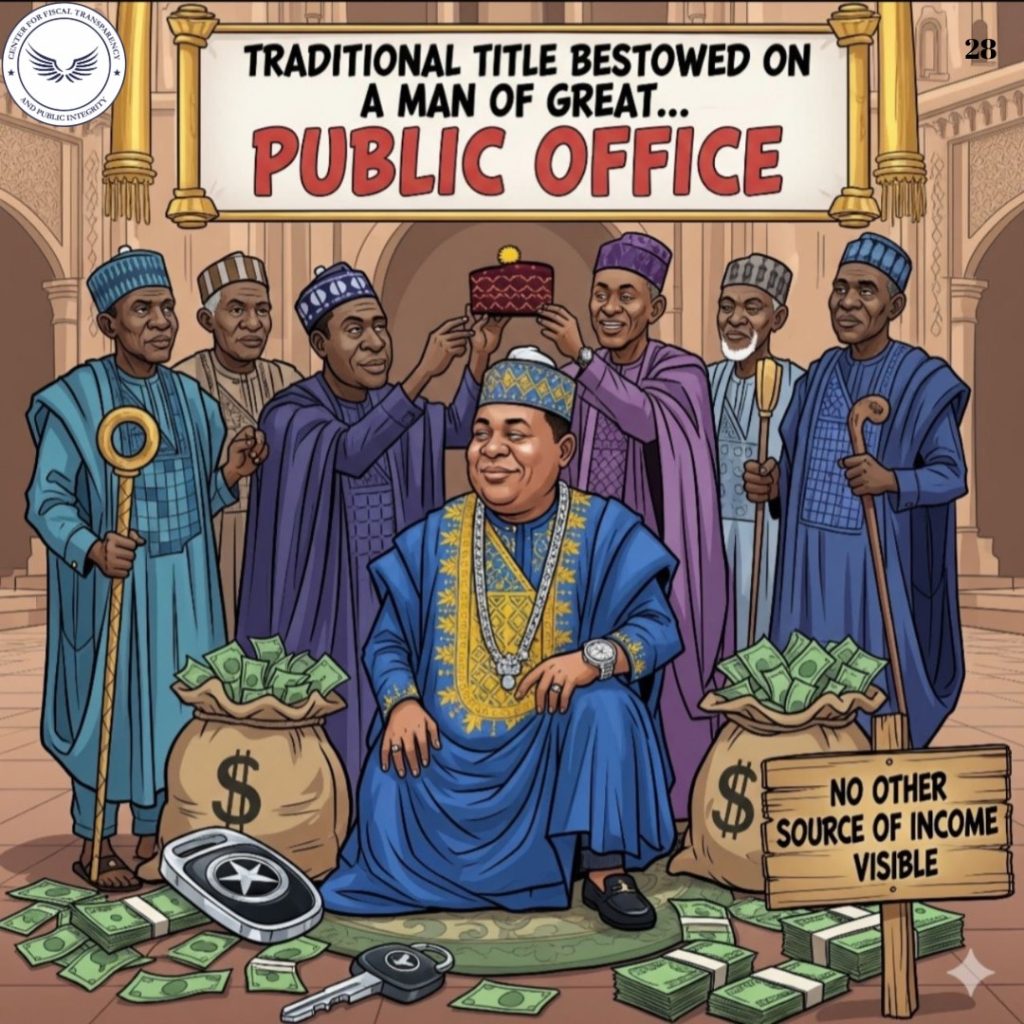
It seems that while the windfall of inexplicable wealth might purchase all the trappings of honor: the gilded robes, the grandiose titles, the fawning crowds, it curiously fails to secure that one elusive commodity: genuine respect. One might buy a traditional title, but one cannot buy dignity.
28. The Great Forgiveness: Where Corruption meets Compassion and Accountability takes a holiday
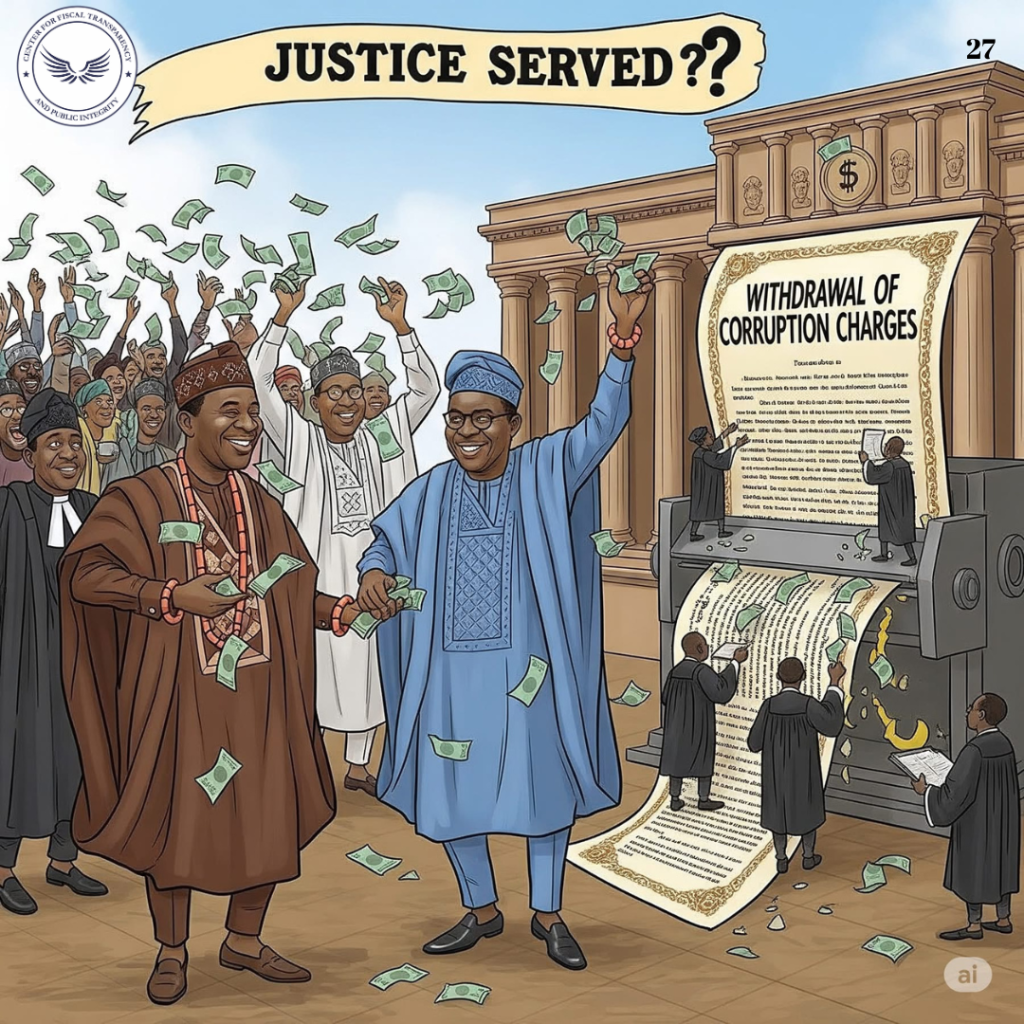
The Federal Government has unveiled its special program, Operation: The Great Forgiveness, for high-profile citizens charged with corruption by the EFCC. The EFCC spends months building a meticulous case, only for the government to swiftly intervene. The charges are not dropped due to a lack of evidence, but rather for the “interest of the people.”
The pardoned individual is viewed not as a criminal, but as a misunderstood patriot and a victim of bureaucratic oversight. The EFCC, left with a sense of déjà vu, simply moves on to its next case.
This cycle highlights a system where justice appears to bend in favour of those with power, while the public is left to wonder if the rule of law is merely a guideline rather than a rule.
27. Silent Tours
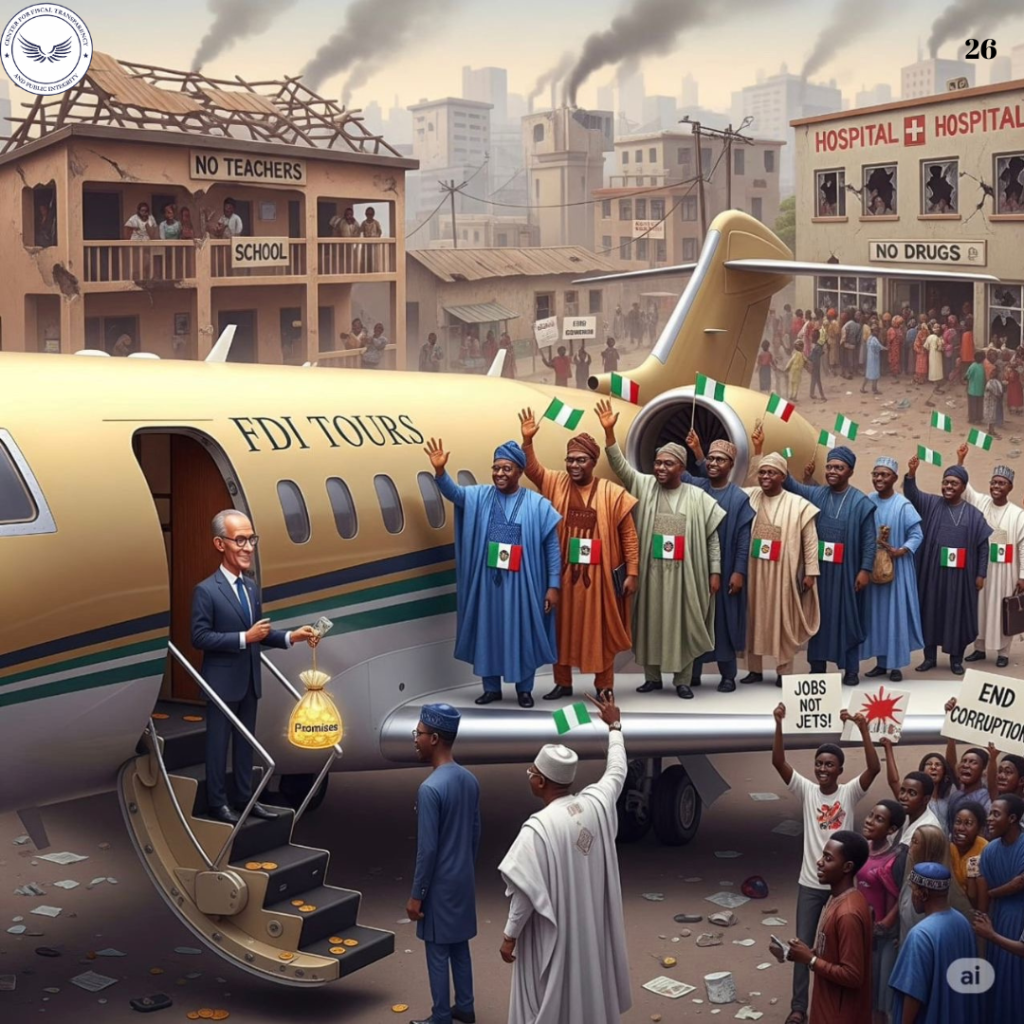
Inspite of all the traveling by the president and state governors, a trickle of Foreign Direct Investment (FDI) have come in.
26. Nigeria Air: Where the only thing that takes off is the Budget
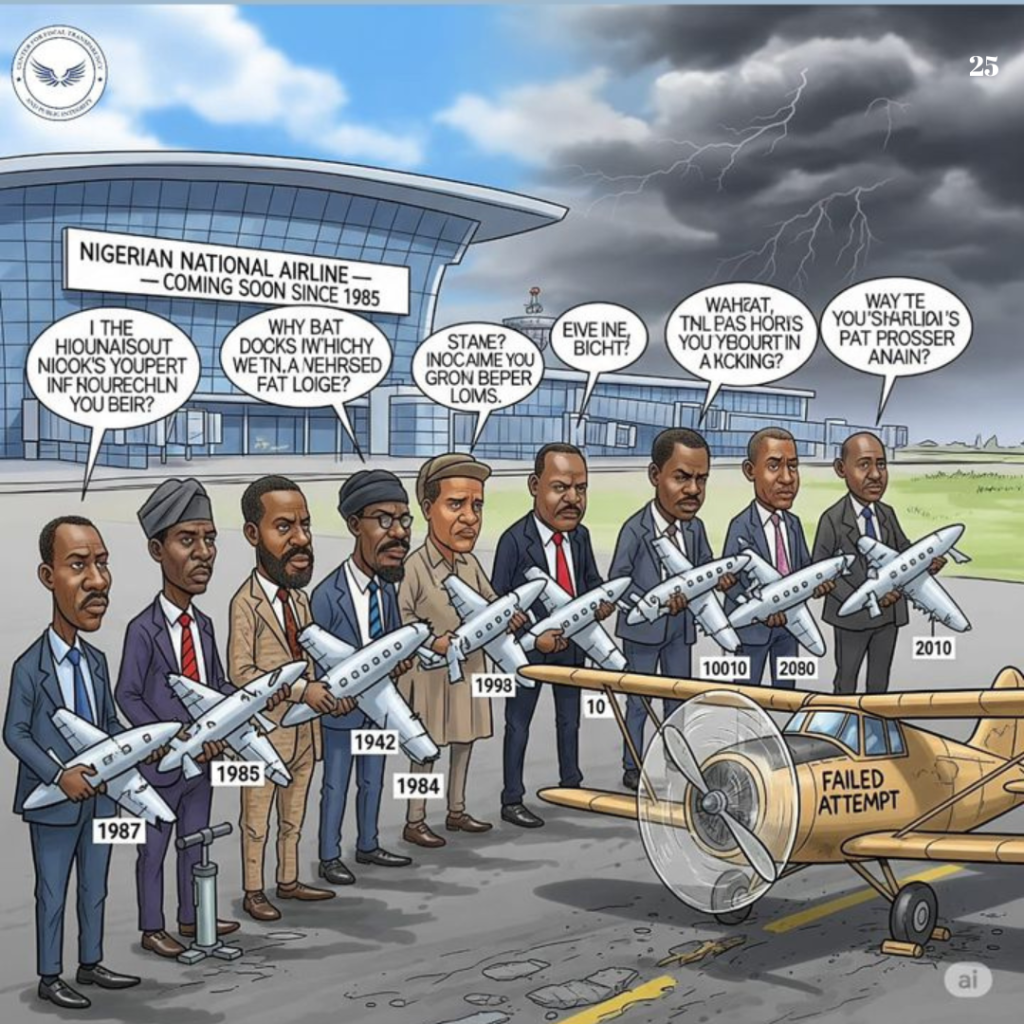
For decades, Nigeria’s quest for a national airline has been a satirical cycle of grand promises and grounded planes, with each new iteration becoming a monument to unfulfilled potential.
25. Fiscal Indiscipline
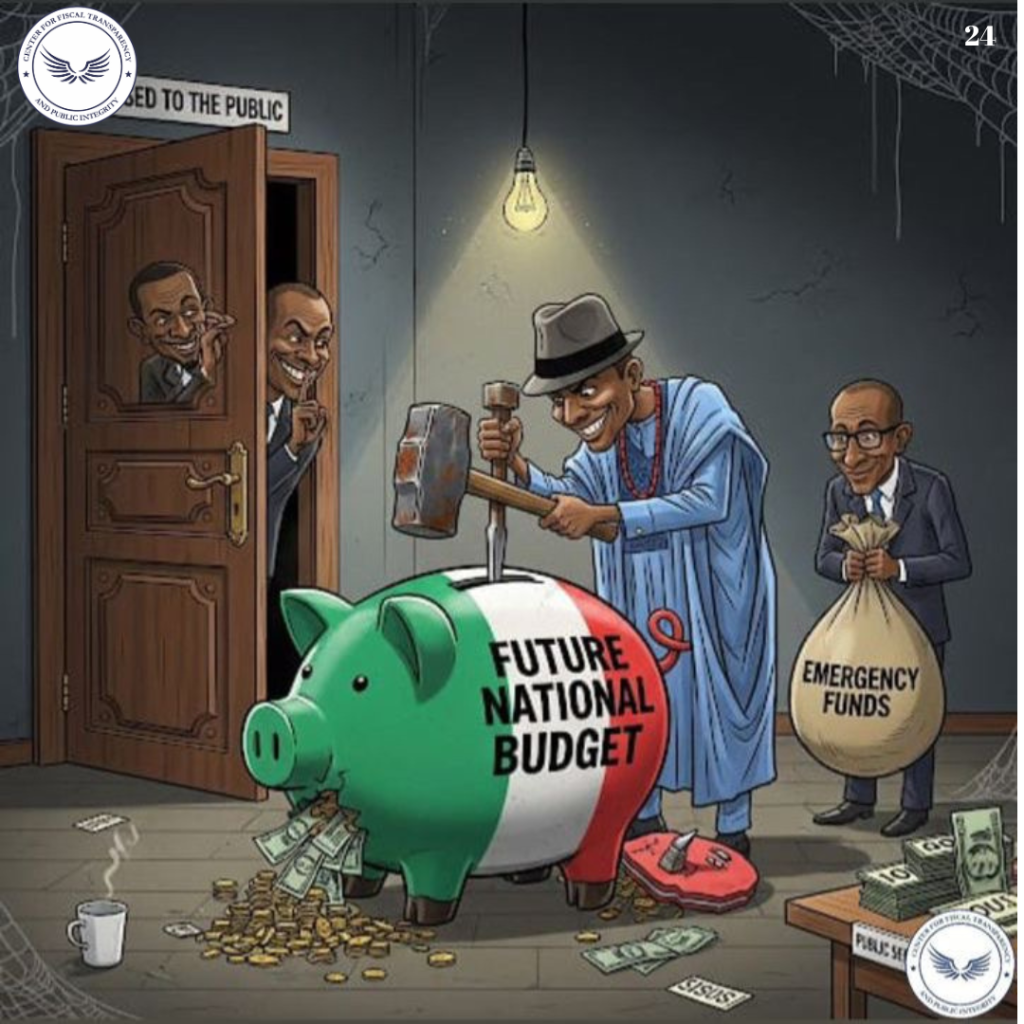
In a dusty, undisclosed chamber, Nigeria’s political class are at work.
With the grace of a surgeon and the precision of a burglar, they operate on a particularly stubborn piggy bank, the “FUTURE NATIONAL BUDGET”.
24. Government to fix Bridge and National Psyche, both broken, one hugely overpriced
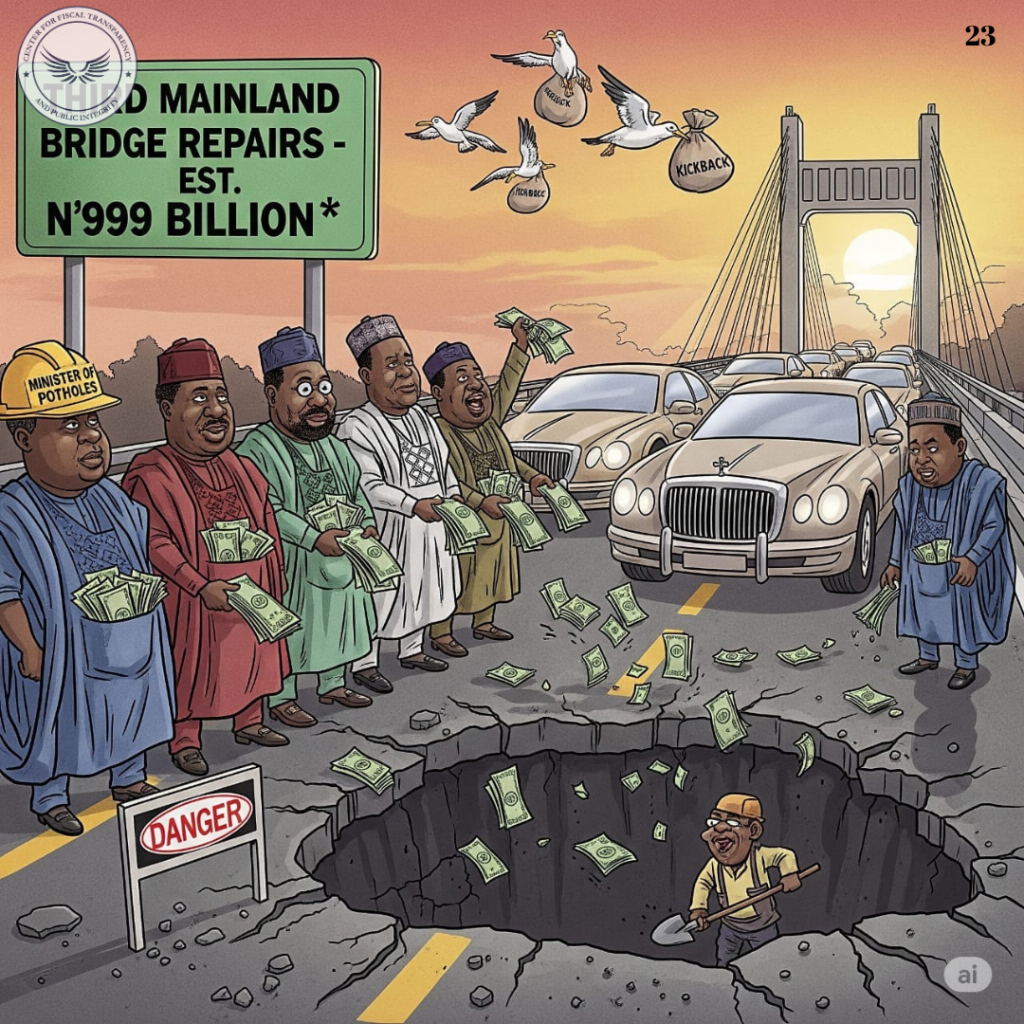
In a bold move, the Federal Government has unveiled a plan to repair the Third Mainland Bridge for “over N3 trillion.” Minister of Works David Umahi framed the figure not as a budget but as a “reinvestment into our national psyche.”
This is no ordinary repair; it’s a “spiritual and structural rebirth.” The astronomical cost is justified by innovative features like self-healing, nano-composite tarmac and “artistic light shows” on every pillar.
Umahi dismissed critics as lacking vision, stating the project will be a monument to a new era of infrastructure. The nation now waits to see what a N3 trillion bandage looks like.
23. Justice weighs Gold
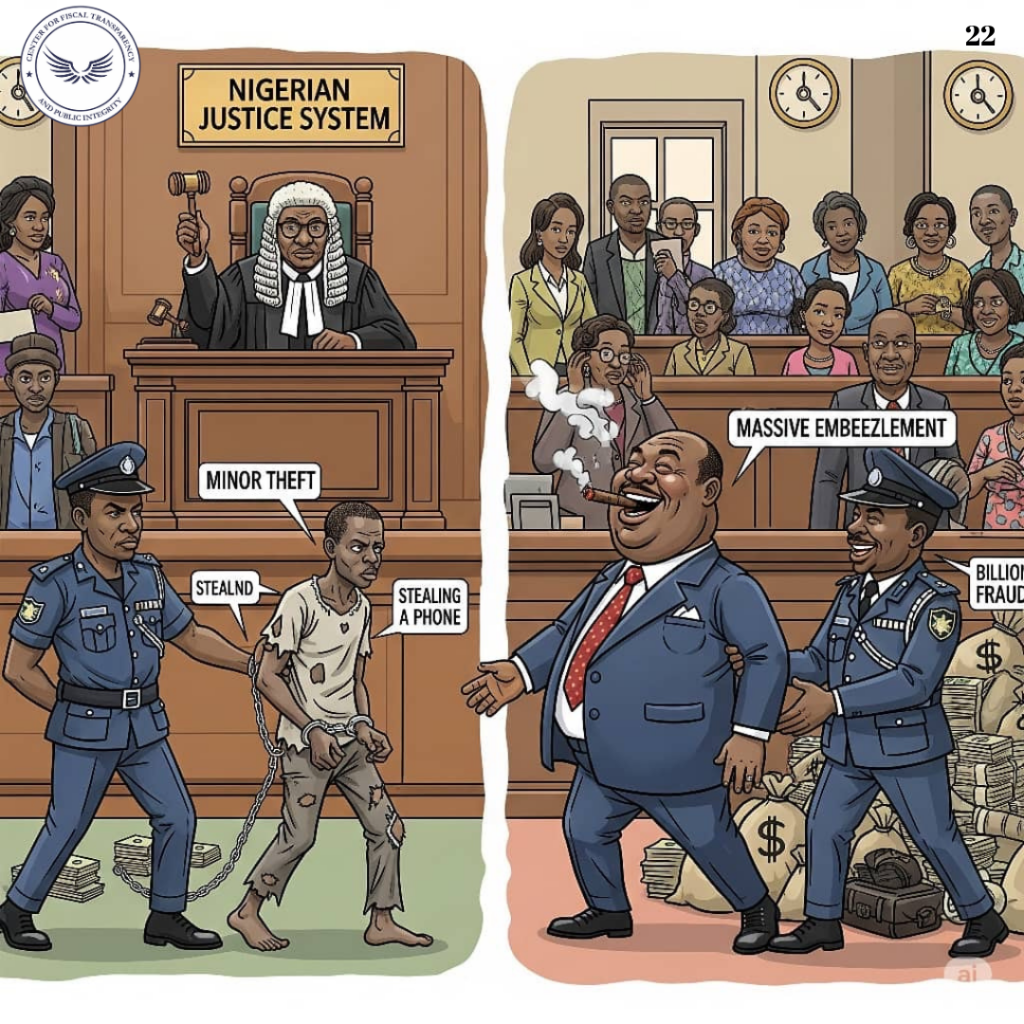
In the land where wealth’s allure takes hold, and justice’s tales are bought and sold,
A big man’s case, with billions spent, is quietly dropped, with no lament.
But for the poor, who steal to eat, the law’s embrace is cold and complete.
They face the cell, the judge’s frown, while the grand fraudster holds the crown.
The lesson is simple, clear and stark: the bigger the theft, the less the dark.
For those with billions, freedom’s sweet; the little thief knows only defeat
22. Golden Runways: A Chronicle of Nigeria’s Airborne Prosperity
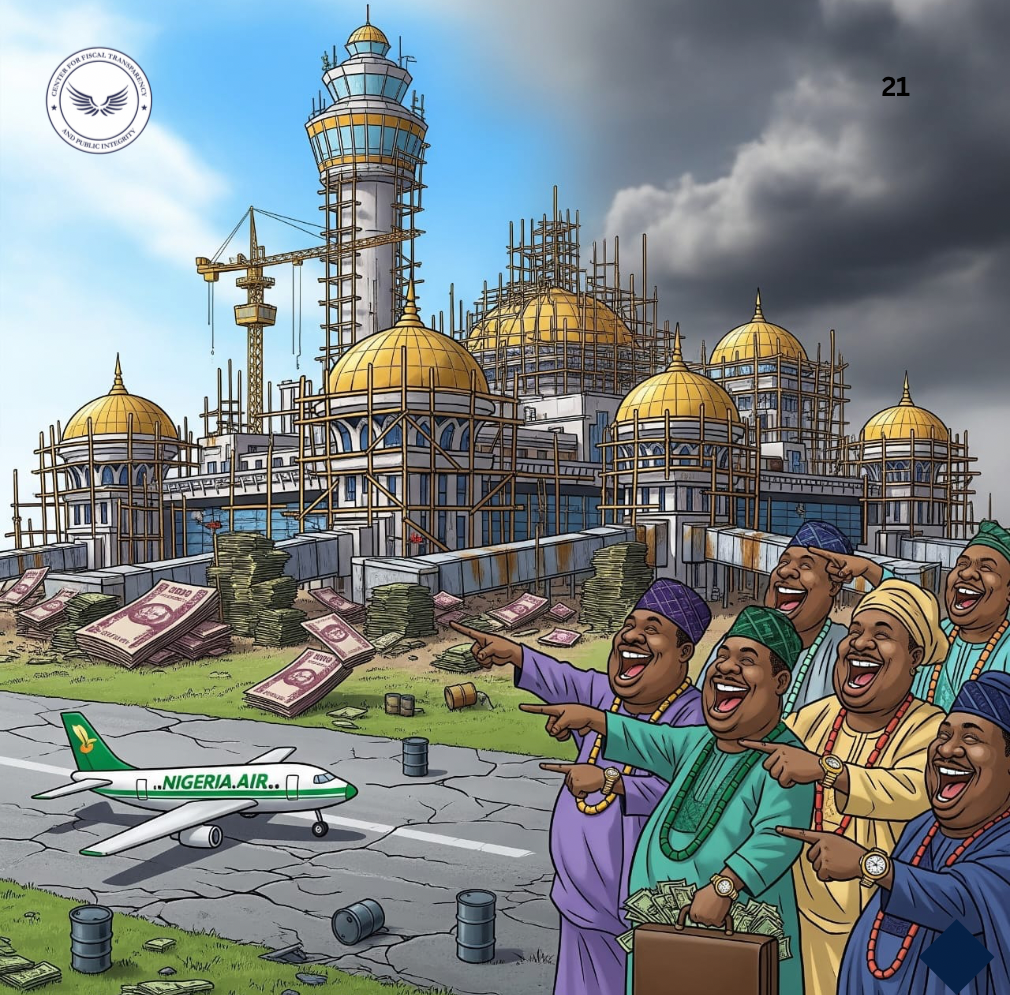
From 1999, a glorious new era dawned upon Nigeria. An era not of schools, not of healthcare, not of agriculture, but of a newfound obsession with renovating airports. Not just any airports, mind you, but grand, palatial structures that were less about facilitating travel and more about providing a tangible testament to the nation’s unparalleled commitment to… well, spending money.
And so, the money flowed like a river during the rainy season. Contracts were awarded with the speed of light, often to companies with names like “Enginos Nigeria Limited” and “Samahah Integrated Investment Limited”—firms whose primary expertise lay not in construction, but in having a CEO who is “a “close acquaintance” of a serving minister.
Take, for instance, the infamous Abuja airport runway project. Originally budgeted at a humble N90 billion, the price tag ballooned faster than a politician’s belly after a contract signing ceremony. It grew to N532 billion! The contractors, in a magnanimous show of goodwill, later offered to “cut” the price to a measly N300 billion. The reason for the increase? Unforeseen “consultancy fees” and “land compensation expenses.” One can only assume these “consultants” were paid to consult with their bank accounts, and the “land compensation” was for the land of the ancestors who had to make way for a second runway that no one was entirely sure was needed.
The minister in charge, a man of profound wisdom and an even more profound sense of self-entitlement, explained the situation with the eloquence of a man who knew he was untouchable. “The cost variation,” he announced, “is a necessary adjustment for national progress. How can you put a price on a legacy? Besides, do you know how many invoices we had to print for a project of this magnitude? The paper alone is worth a fortune!”
The beauty of it all was in the aftermath. The subsequent investigations! The Economic and Financial Crimes Commission (EFCC) would swoop in with the righteous fury of a hawk, arresting a junior supervisor for diverting N11 million in “missing funds” and a minister’s brother for his role in a N5.8 billion contract fraud. The arrests were always televised, a performance as elaborate as any Nollywood film, complete with dramatic headlines and stern-faced officials. The public would praise the government’s renewed fight against corruption, blissfully unaware that the arrested officials would likely be released on bail, their cases dragging on for years until they were quietly forgotten, like two ministers of aviation before him.
The Rebuilding of a Rebuilt Airport
The narrative of Nigeria’s glorious golden runways was so inspiring, so breathtakingly expensive, that it was only a matter of time before the story required a sequel. And what a sequel it was. Just yesterday, a new and bold proclamation echoed across the land, a declaration that was both a triumph of vision and a quiet, dignified burial of all the billions spent before.
The Federal Government, in its infinite wisdom and with the financial swagger of a man who just found a forgotten wallet, announced that the Murtala Muhammed International Airport (MMIA) in Lagos would be completely rebuilt. Not renovated. Not touched up. Rebuilt. Stripped down to its “carcass” and re-outfitted with brand new everything. The cost? A cool N712.3 billion. For just the Lagos terminal, and a few other things. The announcement was a masterclass in political doublespeak, as a minister, with a straight face, declared this was “not a patchwork.”
This, of course, came after the nation had already sunk countless billions into previous “upgrades.” The last major “rehabilitation” had barely concluded, and a new international terminal, built with a Chinese loan, was just commissioned a few years ago. But why use a functional, new terminal when you can rebuild an old one for a price that could fund a small country? It was a clear signal that the government was committed to a new kind of economic model: an infinite loop of deconstruction and reconstruction, each cycle more expensive than the last.
The Phantom of the National Carrier
And what of the national carrier? The beautiful, ethereal dream that has haunted the minds of every aviation minister since the dawn of democracy? Ah, that is the most poetic part of this grand opera of spending. Time and again, successive ministers, with the fervent conviction of a televangelist, promised to revive a national airline.
There was “Air Nigeria,” then “Nigeria Air,” a project so real that it had its own logo, launch ceremony, and even its own leased aeroplane, which promptly flew back to its Ethiopian home right after the ribbon was cut. The project, which was described by a House of Representatives committee as a “fraud,” officially died a quiet death, having swallowed billions of naira without ever taking a single Nigerian on a paid flight.
The latest minister, a man who clearly learned from the “patchwork” mistakes of his predecessors, has now declared that the government is abandoning the idea of a national carrier. It seems the well-fed public servants have finally concluded that it is far easier to build and rebuild palaces for planes that are not there than to actually put those planes in the sky.
So, as the contractors for the new Lagos airport terminal prepare to demolish the previous round of billion-naira renovations, the people of Nigeria can hold their heads high. We may not have a national airline, but our local carriers may be struggling, and our travel experience may still be a test of patience. However, we have something far more valuable: a never-ending cycle of construction projects. And that, dear citizens, is what progress truly looks like.
21. Local Governments, State Puppetry
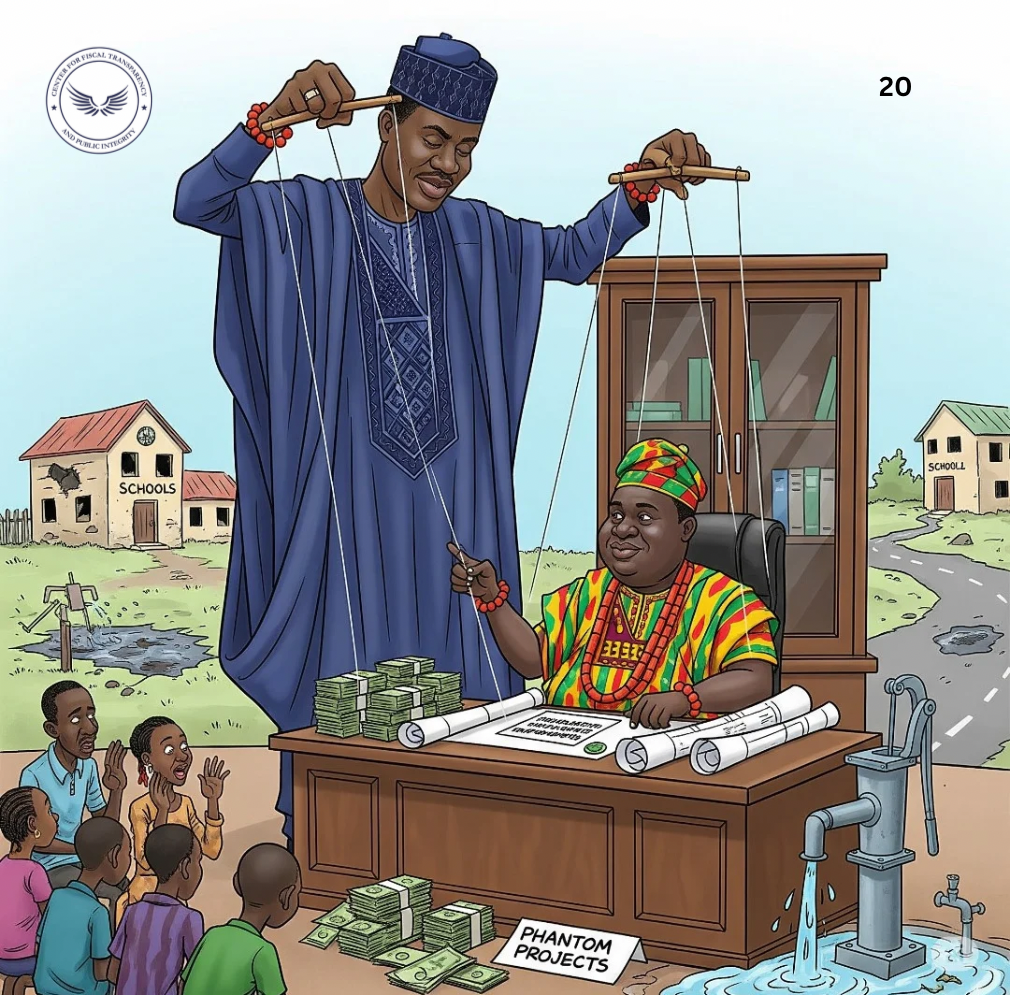
In Nigeria’s glorious political theater, our local governments are simply miniature kingdoms. Their strings? Expertly pulled by state governors, those selfless titans who, despite ruling entire states, find boundless energy to micromanage every local council.
It’s a miracle of governance!
#LocalGovernments #Accountability #CeFTPI #ALGON #ICPC
20. The Auditor General’s Office
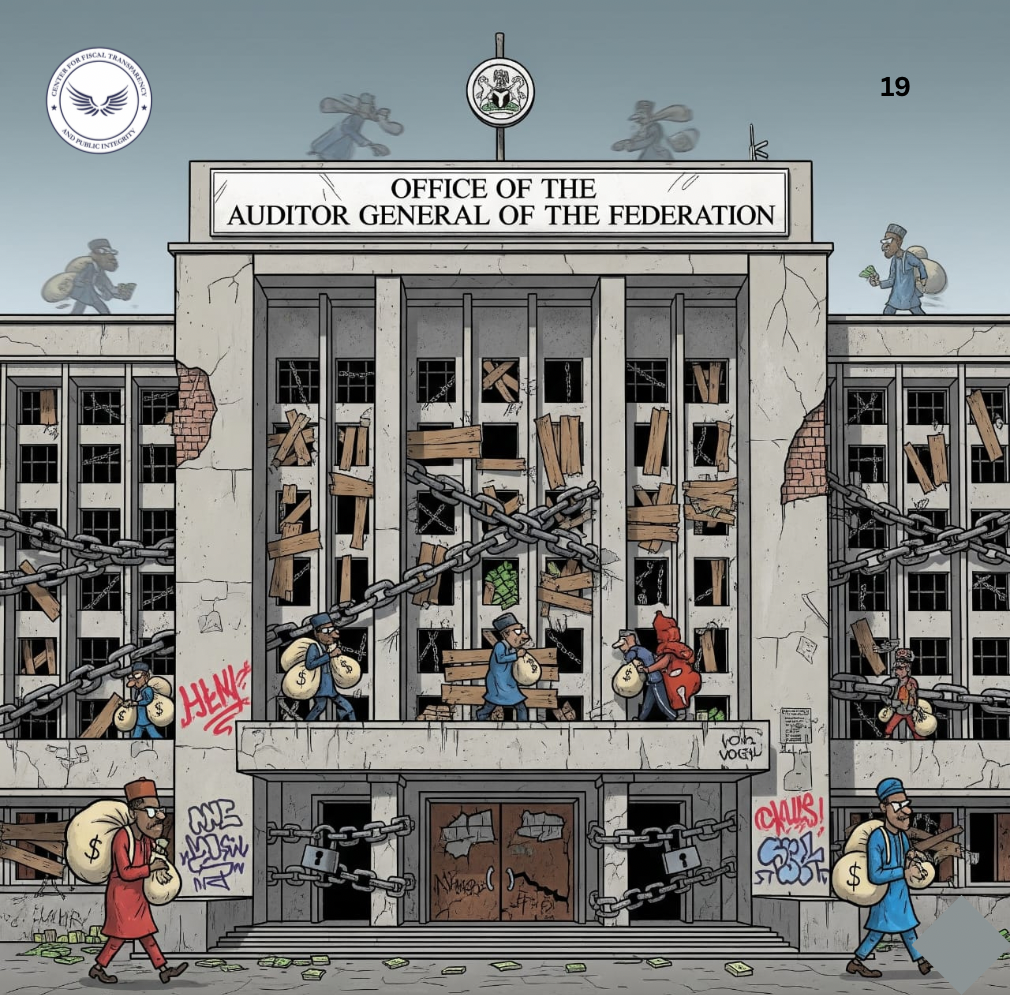
The Auditor Generals Office, a titan in chains,
A captured fortress, where no true audit of public institutions reigns.
Though power’s deep current within its walls lies,
It stands, strangely tethered, beneath watching skies.
#Accountability #OAuGF #NASS #StateCapture
19. NGN 24 Billion for Government House CCTV
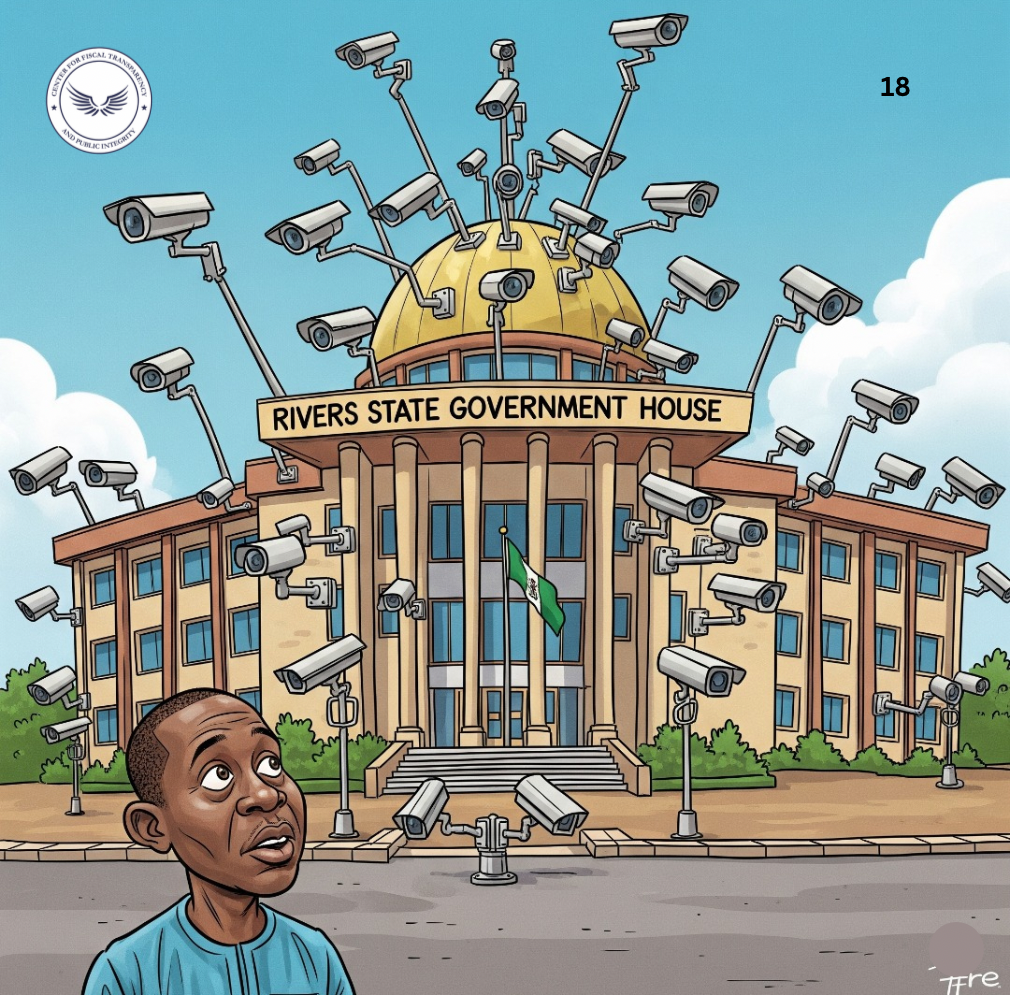
A tale from Rivers, both bold and so grand, Of billions for eyeballs across the land.
Not for schools crumbling, but cameras so keen, Sixteen million dollars, a scandalous scene.
Past leaders, they say, were rather quite blind, No twenty-four billion of this kind.
While classrooms collapse, and teachers are few, a digital guardian, shiny and new.
“For Security’s sake!” cries the voice, loud and clear, but fear for the budget, the funds that disappear.
So praise be the lens, and the pixel’s bright gleam, A luxurious safety, a technocrat’s dream.
18. Nigeria’s New Economic Formula: When in Crisis, Renovate!
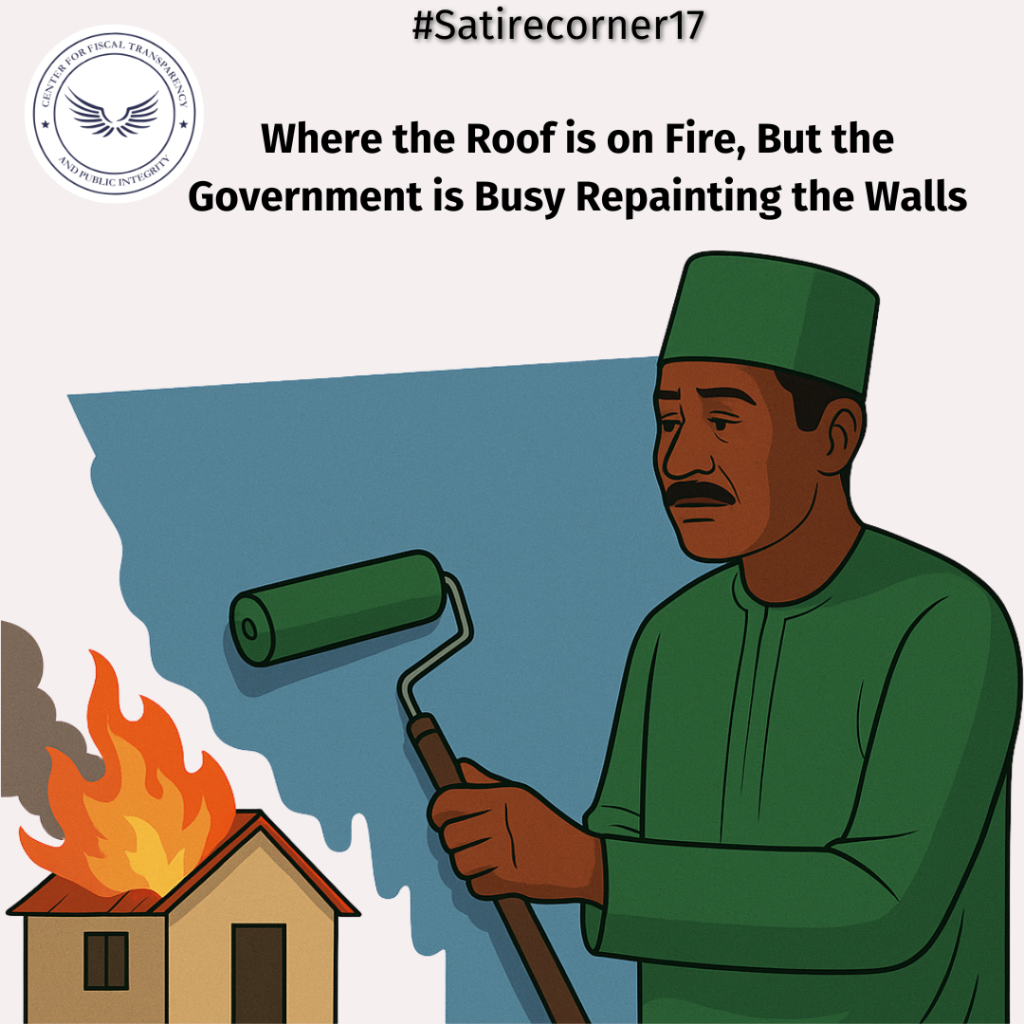
In the grand theatre of Nigerian governance, a new act is unfolding, and it’s called “Renovation Economics.” In this fascinating fiscal fairytale, when citizens cry out over inflation, fuel prices, job losses, and crumbling infrastructure, our leaders reach for… wait for it… paint and granite tiles.
Just weeks after the FCT Minister allegedly spent ₦39 billion to renovate the International Conference Centre in Abuja, a building that presumably suffered from a tragic case of existential fatigue, the Oyo State Government has entered the spotlight with an even grander flourish: a ₦63.4 billion makeover for its Government House.
Yes, you heard right. While families are skipping meals, students are learning in dilapidated classrooms, and hospitals are prescribing “hope and paracetamol” due to lack of equipment, Oyo State is investing in soft rugs, fancy chandeliers, and perhaps golden toilet handles, all in the name of governance, of course.
From a fiscal transparency lens, this begs the question: what exactly are we renovating: buildings or egos?
The argument, as usual, will be framed around “modernizing government infrastructure,” “creating a conducive environment for leadership,” or the ever-reliable “boosting investor confidence.” But let’s be real, when was the last time a foreign investor said, “I would have invested in Nigeria, but the governor’s guest room was outdated”?
Let’s do the math. ₦63.4 billion could build at least 50 functional secondary schools, 30 well-equipped primary healthcare centers, or fix several rural roads. But apparently, those are boring projects. Why solve people’s problems when you can install Italian marble and host executive meetings on mahogany tables?
If this is the definition of “people-oriented governance,” then perhaps it’s time we redefine “the people.” Because clearly, these renovation projects are not for the everyday market woman, teacher, farmer, or youth hustling through fuel queues and data blackouts. No, these projects are for the elite few who measure progress by the thread count of their office curtains.
So, here’s a modest proposal for our leaders: if you truly want to renovate something meaningful, start with public trust. It’s old, damaged, and long overdue for an upgrade. And unlike fancy buildings, restoring trust can’t be done with a cheque, it requires accountability, priorities, and a commitment to serving the people over prestige.
But until then, Nigeria remains the only place where while the roof is on fire, the government is busy repainting the walls.
17.Port Harcourt Refinery Shuts Down Again; Because Maintenance Is the New National Sport
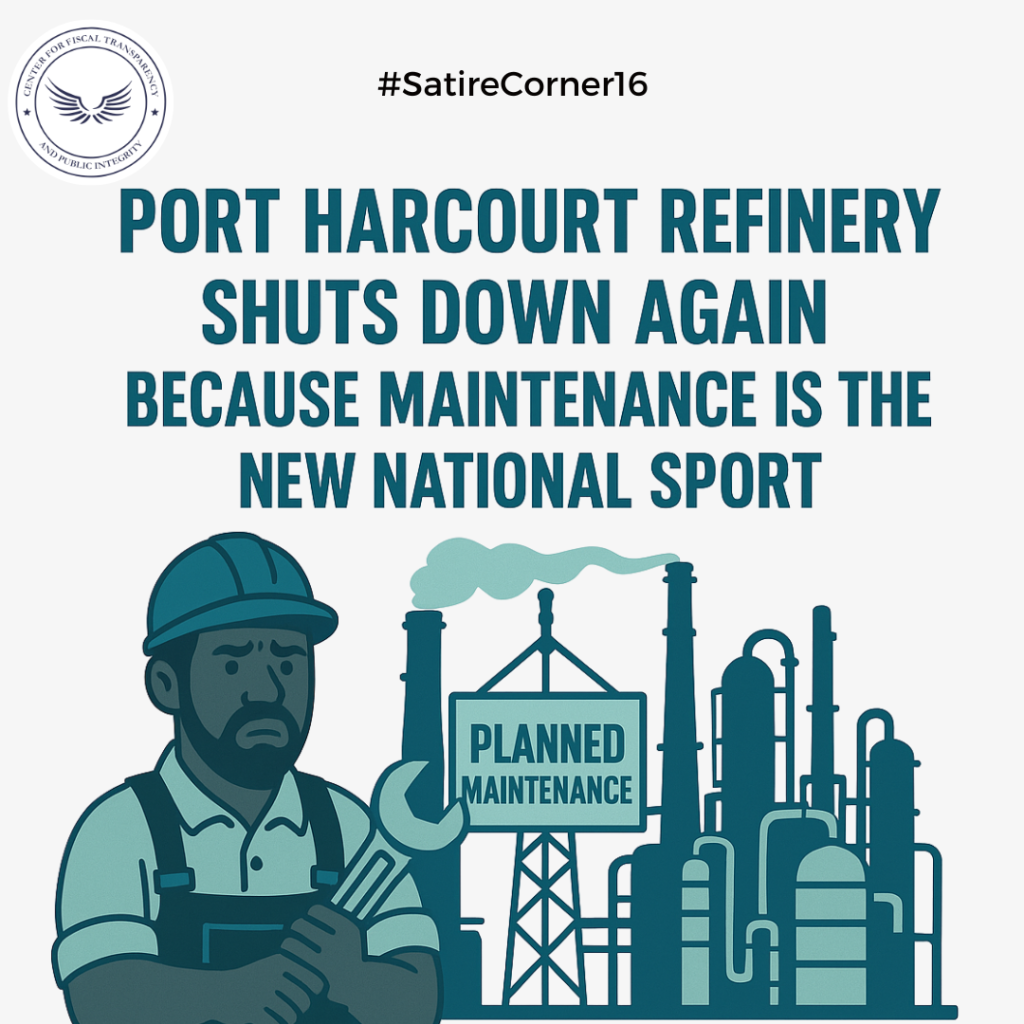
Welcome to Nigeria, the land of endless surprises, where the only thing more predictable than our sunsets is the Nigerian National Petroleum Company Limited (NNPC Ltd) announcing yet another “planned maintenance” for the Port Harcourt Refinery. On May 24, 2025, the NNPC Ltd, with the solemnity of a village elder, declared that the Port Harcourt Refining Company (PHRC) would take a well-deserved nap, sorry, “maintenance break,” to, presumably, polish its pipes and dream of better days.
Imagine this: a whopping $1.5 billion was waved like a magic wand in 2021, when former NNPC Group Chief Executive Officer Mele Kyari promised a “turnaround” for the refinery. Nigerians, ever the optimists, imagined a future where fuel queues vanished, and the PHRC churned out petrol like a Nollywood blockbuster churns out drama. Fast forward to 2025, and that $1.5 billion seems to have taken a vacation to an offshore account, with whispers of mismanagement and alleged embezzlement swirling like smoke from a generator; because, let’s face it, generators are Nigeria’s real refineries.
The NNPC’s press release reads like a love letter to bureaucracy, assuring us that this shutdown is “planned” and “essential.” But in Nigeria, “planned maintenance” is code for “we’re still figuring out where the money went.” The Port Harcourt Refinery, that grand old dame of Rivers State, has been “maintained” so many times, it’s practically a national monument. One might wonder if the maintenance crew is just a group of lads with spanners, sipping tea and debating whether crude oil is best served hot or cold.
And oh, the allegations! The $1.5 billion earmarked for the refinery’s glow-up has sparked more questions than a WAEC exam. Did it vanish into the Bermuda Triangle of government contracts? Or perhaps it’s funding a secret mission to build a refinery on the moon? Nigerians are left clutching their jerrycans, wondering if the funds were spent on “consultancy fees” for experts in the fine art of doing nothing. Meanwhile, fuel prices are still doing acrobatics.
But let’s give credit where it’s due. The NNPC has mastered the art of keeping us on our toes. Every few years, they dangle the promise of a working refinery, only to pull it back with a wink and a “see you after maintenance.” It’s like promising your kids a trip to Disneyland but taking them to the mechanic instead. And yet, we keep hoping, paying through our nose for fuel, and wait for the next NNPC press conference.
So, what’s the endgame? Maybe the Port Harcourt Refinery is destined to be Nigeria’s ultimate performance art, a symbol of ambition that never quite gets off the ground. Or perhaps it’s a reminder that in Nigeria, “turnaround” doesn’t mean progress; it means another spin on the merry-go-round of excuses. As the refinery takes its latest siesta, Nigerians are left to wonder: are we ever going to see the day when our refineries work as hard as our hustle? Until then, let’s raise a glass of overpriced petrol to the NNPC’s favorite pastime, maintenance, the national sport where nobody wins.
16. Refinery Rehabilitation or Renovation of Pockets? A $3 Billion Comedy of Looting
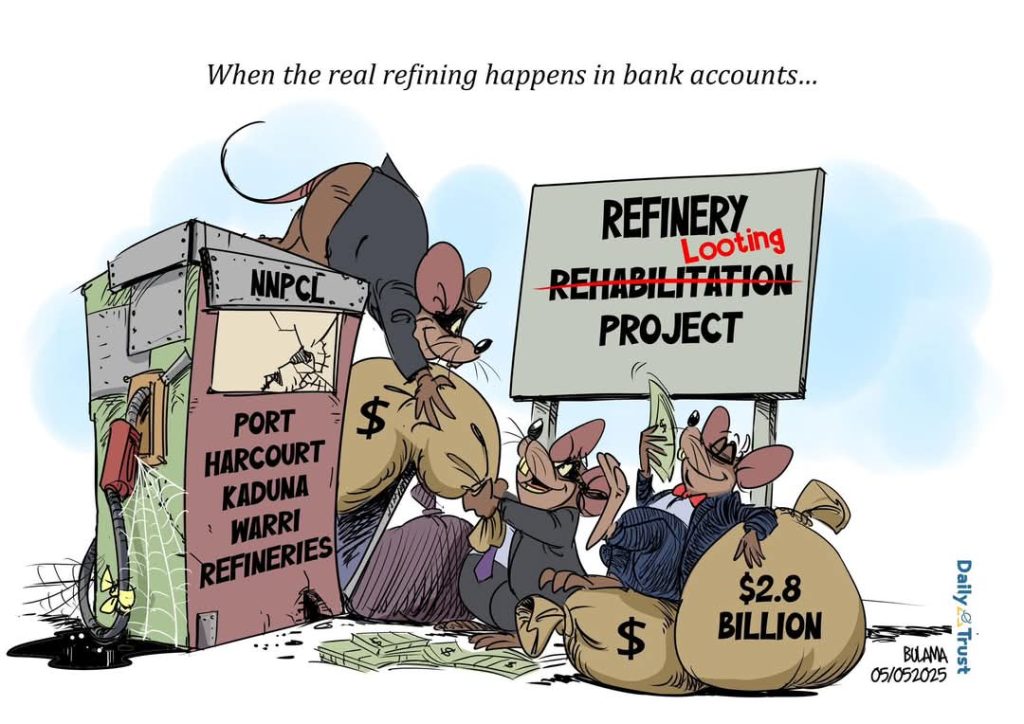
Step right up, Nigerians, to one of the greatest shows on earth: “The Refinery Rehabilitation Ruse!” This drama is starring the Nigerian National Petroleum Company Limited (NNPCL), the Economic and Financial Crimes Commission (EFCC), and a cast of sacked Managing Directors with bank accounts fatter than the refineries’ pipelines!
Let’s set the scene. In the past four years alone, the government has poured a jaw-dropping $2.96 billion into the “rehabilitation” of the Port Harcourt, Warri, and Kaduna refineries. That’s $1.56 billion for Port Harcourt, $657 million for Warri, and $740 million for Kaduna, according to the EFCC’s latest probe. This aside gulping $25 billion as of 2023 in so called “turnaround maintenance” in 25 years producing nothing, but refining pockets. Since 2020, these ailing refineries have racked up over N3 trillion in debts, yet they’ve produced more excuses than petrol. But wait, there’s more! In late 2024, NNPCL’s former boss Mele Kyari proudly declared Port Harcourt and Warri refineries “operational.” Cue the fanfare! Except… Port Harcourt is limping at under 38% capacity, and Warri shut down by January 2025 due to “safety issues.” Operational? More like operationally delusional!
Now, let’s talk about where the real maintenance happened: the bank accounts of the sacked MDs. The EFCC recently uncovered N80 billion stashed in one MD’s accounts, enough to make even Aladdin’s lamp blush. While Nigerians were choking on fuel scarcity, these refinery bosses were apparently “refining” their personal fortunes. And the government? Oh, they were busy playing hide-and-seek with accountability, leaving the EFCC to clean up the mess after the fact.
Here’s the kicker: for $3 billion, Nigeria could have built a brand-new refinery from scratch. Industry estimates peg the cost of a modern 100,000-barrel-per-day refinery at around $2 billion to $2.5 billion. With $3 billion, we could’ve had a shiny new facility, pumping out petrol like it’s nobody’s business, instead of pouring money into these ancient relics that haven’t worked properly since the 90s. But no, why build something new when you can “rehabilitate” the same old refineries for decades, only to end up with N80 billion in someone’s pocket and a refinery that can’t even refine water?
So, what’s the moral of this tale? The Port Harcourt and Warri refineries aren’t just broken, they’re the government’s favorite cash cow for cronies. Nigerians deserve better than this endless cycle of fraud and failure. Let’s demand transparency, or better yet, a new refinery that actually works, because clearly, the only thing being “turned around” here is our trust in the system!
Image credit: Daily Trust
15. Oil Firms Laugh While Government and Anti-Graft Agencies Nap: A ₦61.5 Billion Recovery Circus
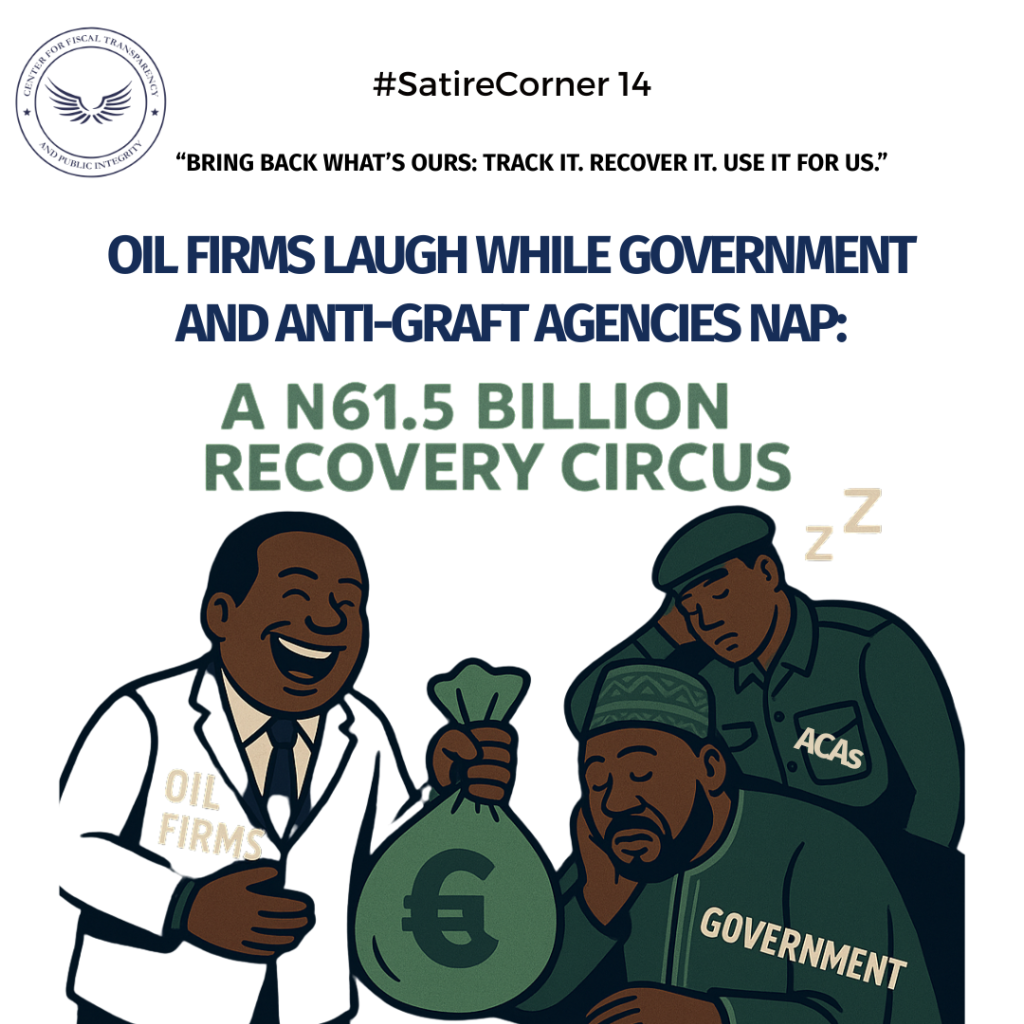
Ladies and gentlemen, gather ‘round for the latest episode of Nigeria’s longest-running comedy show: “The Great Asset Recovery Farce!” Starring the House of Representatives’ Public Accounts Committee (PAC), some slippery oil companies, and a government that’s apparently allergic to accountability!
This week’s plot twist: the PAC proudly announced they’ve recovered an additional ₦11.49 billion from oil firms, bringing their grand total to ₦61.5 billion. Platform Petroleum Ltd coughed up $182,057.44, ₦291.29 million, Midwestern Oil and Gas threw in $730,889.37; ₦1.17 billion, Seplat Energies chipped in ₦1.58 billion, and a few others tossed some pocket change to make the numbers look good. The PAC, puffing out its chest, says this is all thanks to “intensified efforts” using Auditor-General reports and data from the Nigerian Upstream Petroleum Regulatory Commission (NUPRC). Sounds impressive, right?
Let’s zoom out. These oil companies have been owing the Federal Government for years, decades, even. And yet, the PAC had to beg, plead, and send “multiple invitations through public notices and official correspondence” just to get a fraction of the loot back. Many firms didn’t even bother showing up! It’s like inviting a thief to return your stolen TV, and they ghost you, then you throw a party because they mailed you the remote. Where’s the outrage? Where’s the action?
Then, enter the anti-graft agencies, or if you like, the “Nap-Time Champions.” These folks are supposed to be the “pitbulls” of justice, but they’re more like sleepy kittens. Oil companies have been dodging taxes, hiding profits, and laughing all the way to their offshore accounts, while agencies like the EFCC and ICPC are busy… doing what, exactly? Writing strongly worded letters? The PAC had to step in because the anti-graft crew couldn’t, or wouldn’t, hold these firms accountable.
And let’s not forget the government’s starring role in this circus. The same government that can’t keep oil firms in check is also the one failing to ensure these recovered funds actually benefit Nigerians. ₦61.5 billion sounds like a lot, but where’s it going? Schools? Hospitals? Roads? Or is it just vanishing into the black hole of “miscellaneous expenses” like the $311 million Abacha loot that mysteriously funded half-finished projects, I mean the Abuja-Kaduna-Kano Expressway that was only recently re-awarded? The government’s negligence is the real MVP here; negligence in enforcement, in oversight, and in giving a damn.
So, what’s the moral of this tale? Oil firms are throwing a party, anti-graft agencies are snoozing, and the government is too busy tripping over its own feet to notice. Meanwhile, Nigerians are left with crumbling infrastructure and empty promises. Want change? Make some noise! Report shady deals, demand transparency, and maybe, just maybe, our leaders will wake up from their nap.
14. N700 Billion ‘Mistakenly’ Vanishes Under Udom’s Watch
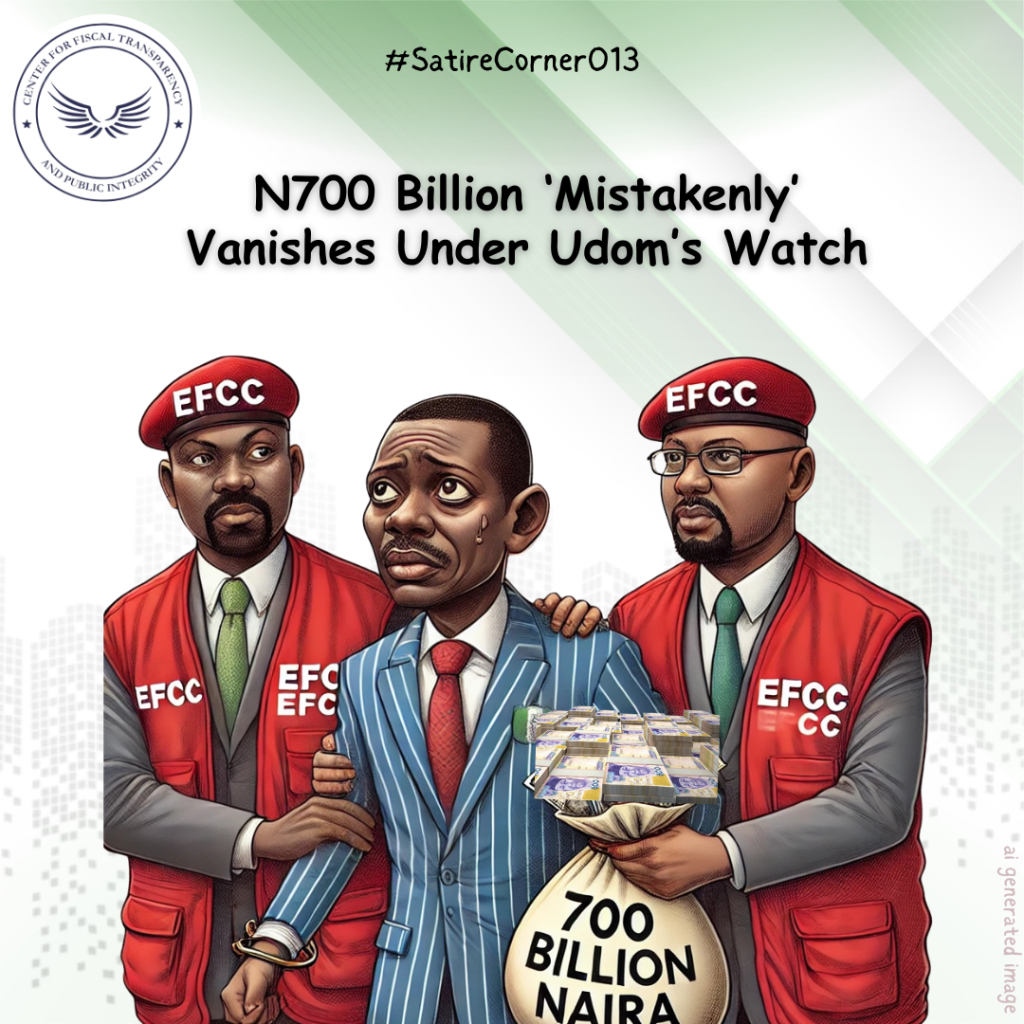
In a shocking turn of events that has stunned absolutely no one, former Akwa Ibom governor, Emmanuel Udom, has checked into the EFCC’s all-inclusive, high-security hospitality suite in Abuja. The reason? A small, almost negligible matter of N700 billion that seems to have misplaced itself under his watch.
According to insider sources, Mr Udom gracefully honoured the EFCC’s invitation, arriving at the headquarters like a man visiting his in-laws—smiling on the outside, calculating on the inside. However, what was expected to be a brief Q&A session turned into an extended, involuntary retreat as the agency decided to detain him.
The alleged offences? Nothing too serious—just money laundering, diversion of funds, and a bit of stealing (because let’s be honest, at this level, you don’t just “misplace” N700 billion like pocket change).
A particularly fascinating detail from the EFCC’s findings is the withdrawal of N31 billion in cash from the “Office of the Governor” account. Analysts say the transaction must have required at least 300 Ghana-Must-Go bags, a convoy of bullion vans, and a highly dedicated team of bodybuilders to carry it all. If confirmed, this would set a new record for Nigeria’s version of “withdrawal limits.”
Meanwhile, the civil society group that petitioned the EFCC, the Network Against Corruption and Trafficking, is reportedly confused as to why the agency is only just inviting Udom. “He left behind a N500 billion debt and abandoned projects worth N300 billion. You mean you didn’t notice until now? Was EFCC using abacus for their calculations?” a representative asked.
As expected, EFCC’s media head, Dele Oyewale, was unavailable for comments—possibly because his phone’s battery died under the weight of corruption-related calls.
Meanwhile, Nigerians are urged to remain calm as this story unfolds. Udom, like many before him, is expected to experience a brief bout of political amnesia, develop an urgent medical condition requiring international treatment, and re-emerge months later in his party’s inner circle as a “strategic stakeholder.”
We will bring you more updates as the EFCC decides whether to actually prosecute or add this case to its growing collection of high-profile unsolved mysteries.
13. Governors’ Spendthrifts: Where Budgets Fly Higher Than Revenues
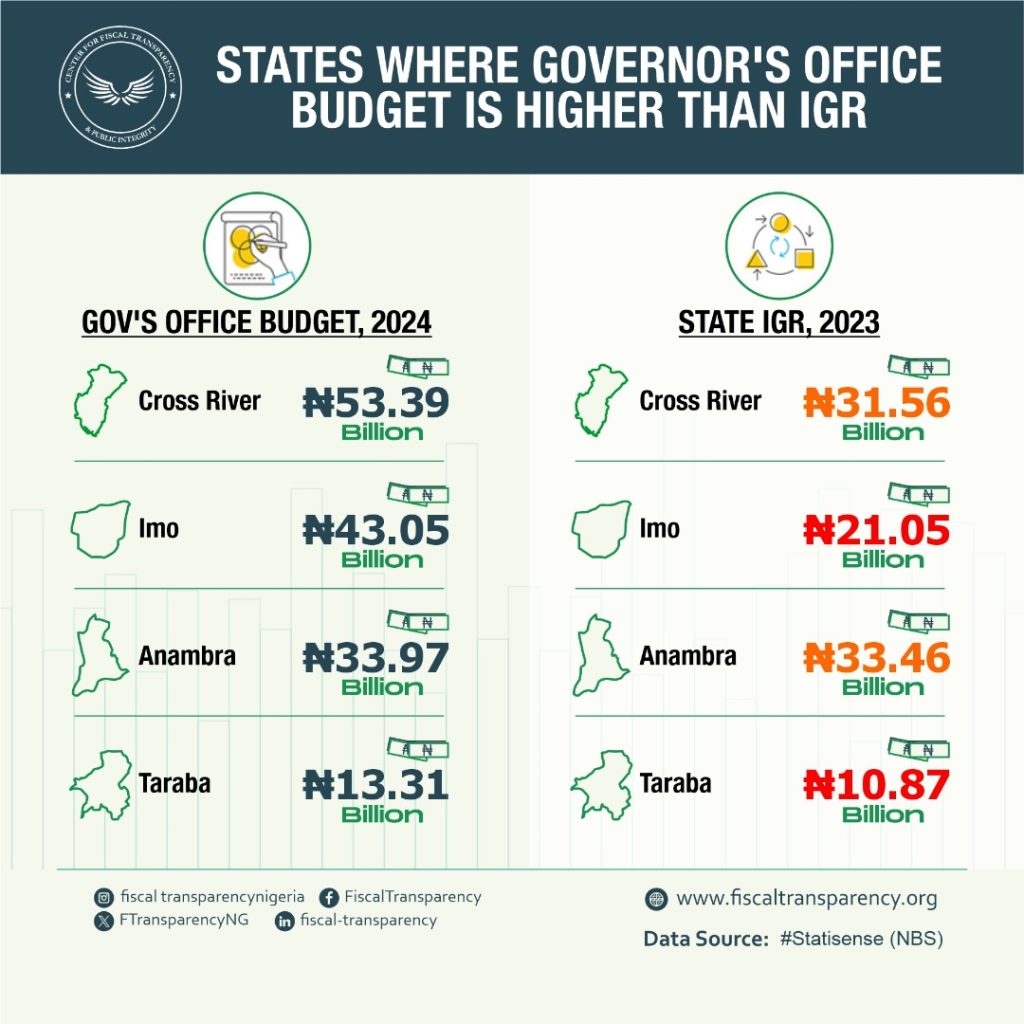
Welcome to Nigeria, where financial reality seems to operate in its own magical dimension. Here, the budget for a governor’s office can soar past the state’s entire Internally Generated Revenue (IGR) without so much as a raised eyebrow. Just ask Cross River, Imo, Anambra, and Taraba: these states have turned “living beyond your means” into an art.
Let’s start with Cross River. The state’s governor’s office has a mind-boggling budget of ₦53.39 billion for 2024, while the state’s IGR for 2023 sits comfortably at ₦31.56 billion. This budget stands at 169% of what the state actually earns! Perhaps they’re hoping the spirit of Ayade’s “superhighway” will materialise again, magically transforming the treasury to cover these bills. Who cares if they’re digging themselves into a fiscal ditch? The important thing is that the governor’s office can operate in style.
Then there’s Imo, where the Governor’s Office budget sits proudly at ₦43.05 billion, twice (205%) the state’s entire 2023 IGR of ₦21.05 billion. Apparently, the Imo administration operates on the philosophy that the sky’s the limit. With public service finances this divorced from reality, maybe the governor’s office plans to fund dreams instead. One has to wonder if they’re budgeting for governance or a first-class ticket to Fantasyland.
Anambra offers a more “modest” case: the Governor’s Office budget of ₦33.97 billion just barely inches past the IGR of ₦33.46 billion, at a comparatively “reasonable” 102%. In Anambra, they’re not exceeding by a staggering margin; they’re simply hovering around the line. Perhaps, they believe in “keeping it close.” Why stop at balance when you can edge just over it, after all?
Taraba, however, deserves a special mention for sticking to a budget 122% of its IGR. With a governor’s office budget of ₦13.31 billion against an IGR of ₦10.87 billion, it seems they’re playing a “go big or go home” game on a smaller scale. Why bother about fiscal discipline when you can exceed your earnings by a mere billion or two?
The trend here is clear: in these states, the governor’s office is the ultimate VIP lounge that’s open to dreams, but immune to restraint. And who cares if the treasury goes up in smoke? For these governors, the prestige of a luxurious office seems far more appealing than such trivialities as fiscal responsibility. Cheers to the governors who spend like there’s no tomorrow, because for taxpayers footing these bills, there may well be none!
12. The Benevolent Overlord’s Compassion
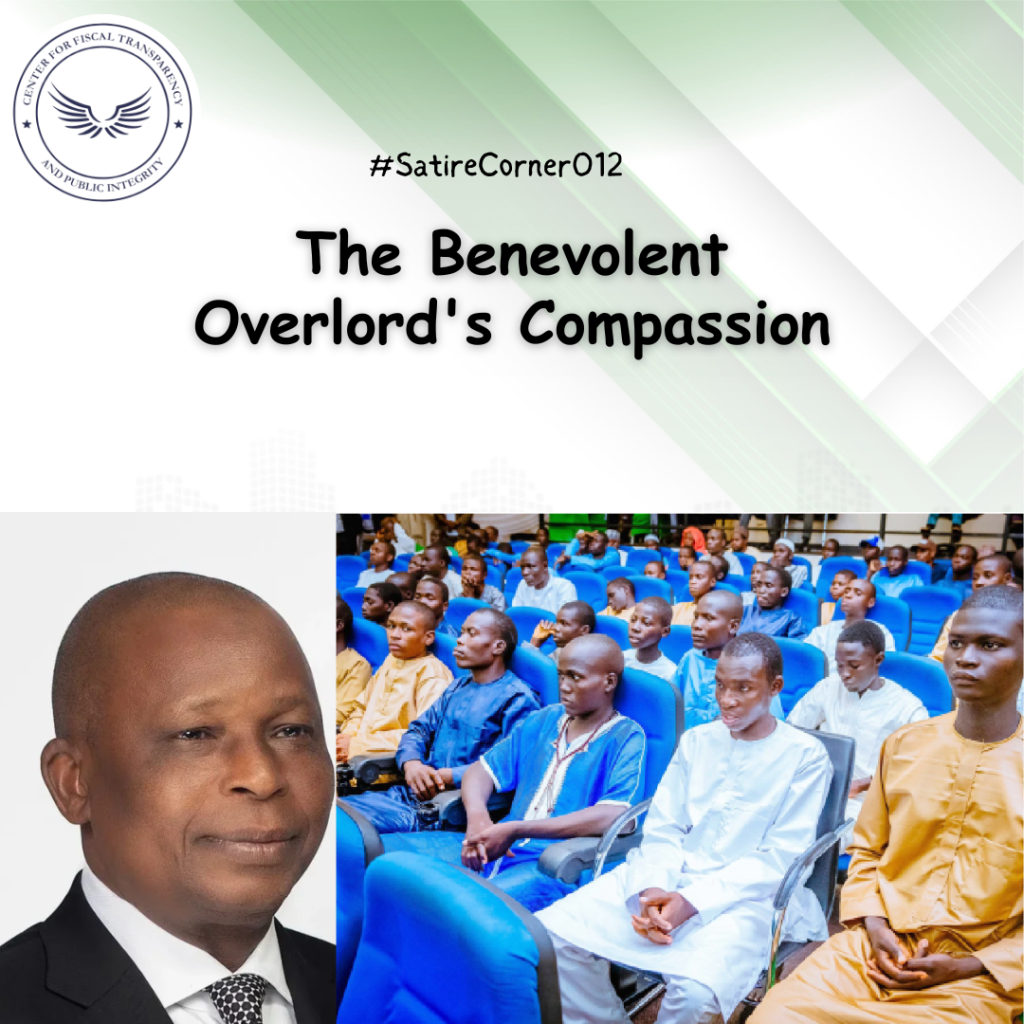
In a shocking display of magnanimity, the Nigerian government have decided to release the “minor protesters” arrested during the recent #EndBadGovernance demonstrations. Shedding crocodile tears over the supposed ₦300 billion in losses incurred, they have bestowed upon these young troublemakers the ultimate gift – a second chance to “sin no more.”
One can almost see the halo glowing above our leaders’ head as they generously pardon these troublemakers. After all, what are a few trampled civil liberties compared to the staggering economic impact of citizens daring to voice their discontent? Clearly, the higher echelons of Nigerian leadership have the country’s best interests at heart.
Of course, the Government Counsel’s insistence that the arrested individuals were in fact grown men and “married” is a touching testament to the government’s commitment to honesty and transparency. One can hardly fault their zeal in ensuring no criminals slip through the cracks, even if it means outright fabricating details. After all, the loss of ₦300 billion is no trivial matter – a figure suspiciously close to the amount routinely “misplaced” by government officials.
Yet, while the government sees fit to prosecute and vilify these young protesters, the likes of the White Lion remain free to roam the land, wanted by the EFCC for a negligible sum of ₦80 billion in money laundering. Clearly, the scales of justice are weighted in favor of the connected elite, who can evade accountability with impunity.
It’s a true wonder that these benevolent leaders, with their immaculate records of fiscal responsibility and unwavering devotion to the public good, have deigned to show mercy. Surely, the common folk should be grateful for this display of benevolence, rather than questioning the motives behind it. After all, who are we to doubt the wisdom of our esteemed overlords?
So let us all bask in the glow of the government’s compassion, secure in the knowledge that our leaders have our best interests at heart. And if we happen to find the whole charade a touch too sweet, well, we can simply chalk it up to our own cynical misunderstandings. After all, what do we mere citizens know of the intricate workings of power?
11. Reps vs FIRS, CAC and NDIC: Another Probe Destined for the Archives?
Recently, the noble House of Representatives are at it again with their fancy series of unending probes. This time, they’ve decided to shine their investigative flashlight on the Federal Inland Revenue Service (FIRS), Corporate Affairs Commission (CAC), and the Nigeria Deposit Insurance Corporation (NDIC). Their noble mission? To probe into alleged extra-budgetary expenditures and, of course, the perennial plague of lopsided employment.
Apparently, the recruitment practices at these critical agencies have (you can guess already) favoured certain individuals. Yes, folks, we’re supposed to be shocked that jobs aren’t distributed with pristine fairness. After all, it’s not like “who you know” have ever mattered in Nigeria before. But never mind, for the House has resolved to set up an Ad-hoc Committee to launch a comprehensive investigation. This panel, we’re assured, will “ascertain compliance with Federal Character principles” and report back in just four short weeks. Because four weeks is definitely all it takes to uncover and redress decades of entrenched nepotism and fiscal wizardry.
The House further assures us that the alleged extra-budgetary expenditures and lopsided recruitments are more than just rumours whispered in the corridors of power. These are serious accusations that, if true, could erode public trust in vital institutions, and possibly – just possibly – have a mild impact on Nigeria’s tax collection, corporate regulation, and financial stability. A mild impact, you say? Well, at least we’re not trying to be dramatic here.
Now, if you’re sensing a hint of scepticism in my tone, you’d be correct. Because, let’s be real, the phrase “House of Representatives to investigate or to probe” has become a national inside joke. Over the years, how many panels, committees, and probes have they announced with great fanfare? And how many of these have led to anything remotely resembling accountability? I’ll wait while you count on one hand.
In fact, this “probing business” has become something of a seasonal sport. Every few months, we’re treated to the same song and dance: A committee is set up, hearings are held, important people are summoned, and TV cameras roll. Then, after a few weeks of theatrics, the reports are quietly shelved, or perhaps transformed into coffee table decor in some plush office. The alleged offenders? More often than not, they return to business as usual, probably emboldened by the fact that “probes” in Nigeria have all the bite of a toothless guard dog.
So, the House’s song about eroding public trust and damaging critical institutions are on the mark, forgive us if we’re not exactly holding our breath for some game-changing reform. This latest probe is likely to follow the time-honoured tradition: lots of noise, an inconclusive report, and, in the end, nothing that’ll really shift the status quo.
In four weeks, they say, we’ll have a report. And in four months? We could bet our money on this “probe” being a distant memory. But who knows – maybe we are just being pessimistic. Or maybe we have just watched this movie one too many times.
In fact, our Centre has compiled about 700 grand corruption-related probes over the years, yet not a single one has reached any meaningful conclusion. It’s a graveyard of half-baked investigations and forgotten files, each one pointing to the endless cycle of “probes” destined for the archives. So, pardon our cynicism, but this latest House endeavour has all the markings of yet another chapter in the unending saga of unfinished business.
10. Shuffling Deck Chairs on the Titanic: Tinubu’s Cabinet ‘Reboot’
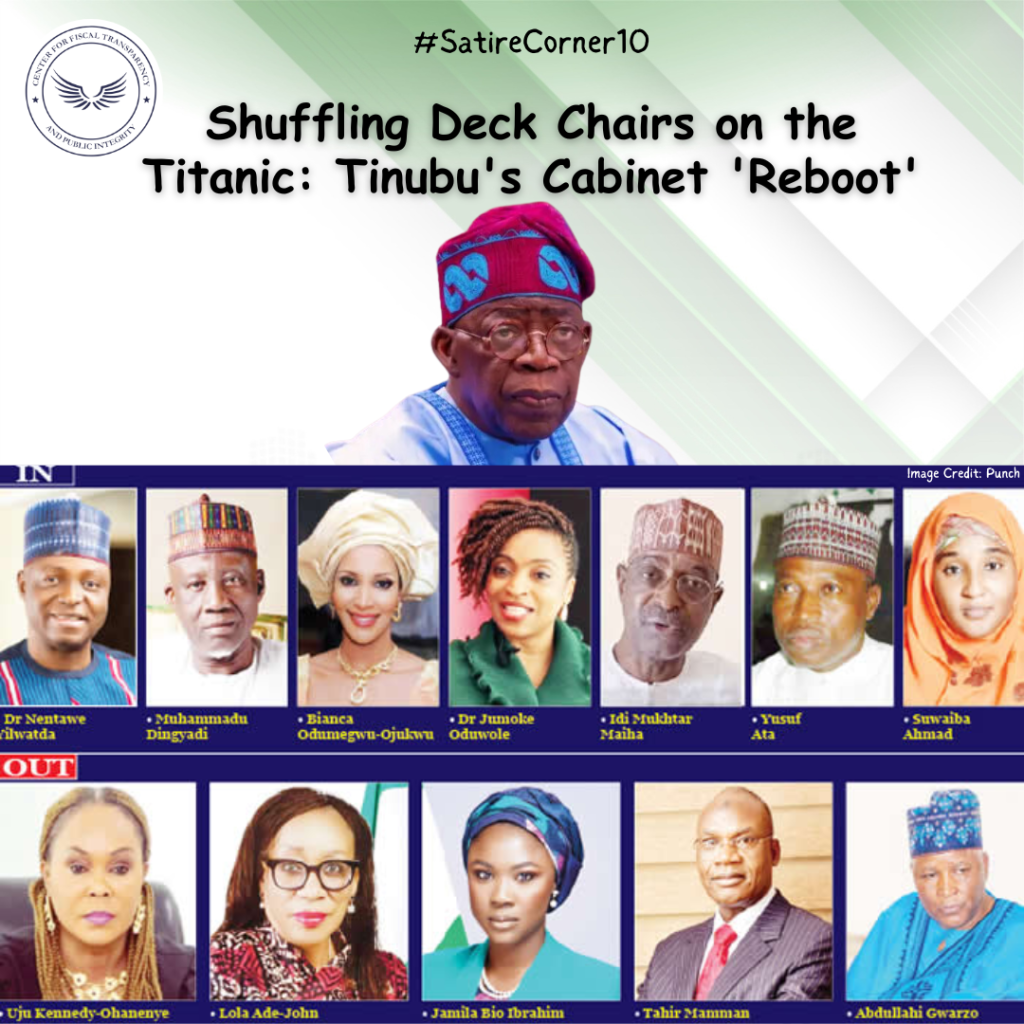
The recent grand reshuffle of the Federal Cabinet by President Tinubu is a familiar dance where ministers are shifted like pawns on a chessboard, and somehow, we are supposed to feel a renewed sense of hope. The President, in his wisdom, has decided that the key to Nigeria’s future lies in rebranding ministries and giving a few politicians new offices to warm their seats in. If you can’t fix the system, just give it a new name, right?
For starters, the Ministry of Niger Delta Development is no more; it has been reborn as the Ministry of Regional Development. It’s like changing the label on an expired can of beans – you can call it gourmet cuisine all you want, but we all know it’s still the same old beans inside. The Niger Delta will still be watching oil spill into their rivers while the ‘new ministry’ oversees everything from the North East to the South East. Efficient, isn’t it?
There’s also the scrapping of the Ministry of Sports Development, which apparently is no longer needed. Who needs sports anyway? Nigerians are more focused on the sport of surviving hunger, unemployment, and power outages. I suppose watching the national grid collapse for the umpteenth time has its own competitive thrill. And let’s not even start on the Ministry of Tourism being merged with Arts and Culture. What better way to celebrate Nigeria’s rich cultural heritage than to merge everything into a convenient catch-all ministry? One ministry to rule them all.
Nigerians aren’t exactly impressed, and who can blame them? “Reshuffling deck chairs on the Titanic” comes to mind. For every minister sacked, there are calls for more to be shown the door. The minister of power, still clinging to his position despite presiding over blackouts and rising electricity tariffs, has become a national meme. And as for the minister of petroleum, let’s just say the people are still waiting for some ‘empirical evidence’ of his usefulness.
Of course, there’s no cabinet reshuffle without critique. A lot of analysts have swiftly labelled the whole exercise as a distraction, with somebody calling it a “filthy rag replacement.” A bit harsh, but when you’re standing in long queue under scorching sun to buy fuel at N1050 a litre, harshness feels appropriate.
In the end, one thing is certain: this reshuffle isn’t fooling anyone. Nigerians want food, jobs, better healthcare, better roads, security, and electricity – not ministries with fancier names or new ministers in old roles. But hey, we’ll take our wins where we can get them. After all, at least someone thought to leave a ministry for the Creative Economy. Because if there’s one thing Nigerians have perfected, it’s creatively surviving whatever is thrown their way.
Now, let’s all sit back and watch the grand spectacle unfold. With the new Ministers and these freshly ‘rebranded’ ministries, surely we’re on for a groundbreaking transformation -perhaps even the discovery of a square wheel. So, let’s keep our expectations modest, maybe just shy of a miracle. At least we’ll have front-row seats to another round of expertly packaged mediocrity.
9. The High-Flying Extravagance of Nigerian Diplomacy
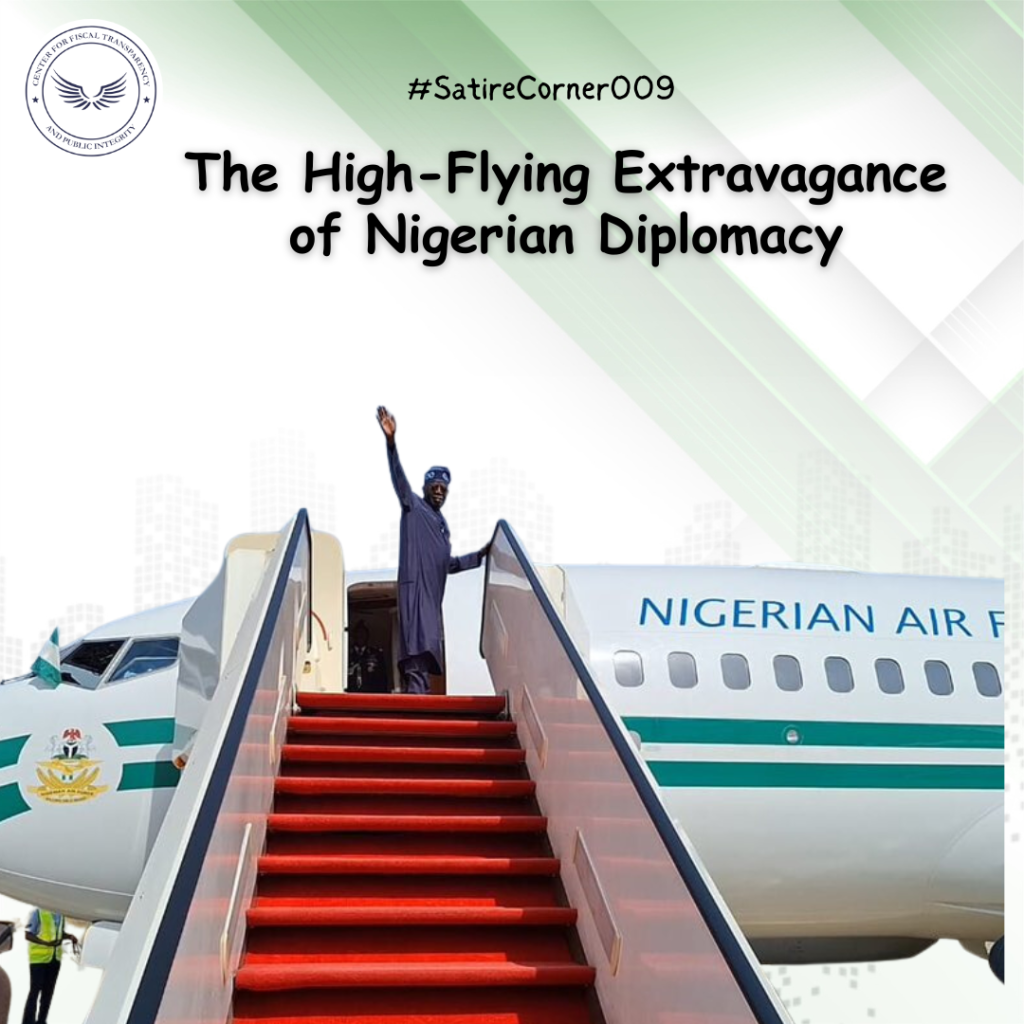
As recently revealed by BudgIT’s GovSpend in July 2024, the Nigerian presidency has pulled off a billion-naira bonanza, spending a staggering N16.06 billion on foreign currencies for international trips in just one year. Yes, you heard that right: N16.06 billion
It’s almost as if President Bola Tinubu and his entourage have been on a year-long world tour, with stops at every glamorous hotspot and diplomatic gala imaginable. One might wonder if they’ve earned enough frequent flyer miles to circle the globe several times over. And who can blame them? When you’re spending N10.93 billion just on the president’s trips, you’ve got to make sure you’re getting the most out of every private jet.
The Vice President, not to be outdone, chipped in a modest N101.68 million for his excursions. It seems even the second-in-command needs a break from the rigors of governance, preferably somewhere in the Swiss Alps, where N426.88 million could get you a hot chocolate and a room with a view.
But let’s not forget the First Lady, whose globetrotting adventures cost a cool N623.05 million. Whether it’s Paris, Mozambique, or London, the First Lady’s itinerary reads like a travel blogger’s dream, each trip dripping with diplomatic necessity and, of course, high-end shopping sprees.
Even the Chief of Staff got in on the action, with N59.24 million allocated for international engagements. One might speculate that the Chief of Staff’s travels are akin to a VIP scouting mission for upcoming UN assemblies, ensuring every detail is as polished as the silverware at the banquet.
And who could overlook the Presidential Air Fleet? With N4.97 billion spent to keep those engines roaring and the champagne flowing at 35,000 feet, one can only admire the dedication to ensuring that the sky truly is the limit for our esteemed leaders.
Now, in the spirit of fairness, it’s important to note that the naira has recently taken quite a nosedive, plummeting over 70% against the dollar. So perhaps it’s not entirely the presidency’s fault that a trip that used to cost N464.5 million now requires N1.56 billion. After all, even leaders need their international pitstops, though at a discount rate, one would hope.
So, as we marvel at these astronomical expenses, let’s tip our hats to the Nigerian presidency for setting a new benchmark in extravagance. Who knew that international diplomacy could be so delightfully decadent? Cheers to another year of luxurious travel, as the rest of us hold our breaths and our wallets a little tighter!
8. EFCC and the Nigeria’s Midnight Magicians
The Chairman of the Economic and Financial Crimes Commission (EFCC), Ola Olukoyede, recently took to the podium to bemoan the magnitude of theft in the country, where he expressed disbelief that Nigeria still manages to stand on its own two feet. He probably checked those case piles of corruption cases files with a faint hope of finding the level of integrity of the people in government.
The esteemed chairman’s lament continues with tales of midnight magic tricks, where unspent budget allocations vanish into private accounts as the clock strikes twelve. It’s almost admirable how dedicated these corrupt elements are to their craft. If only they applied the same tenacity to nation-building.
In a moment of sheer optimism, Olukoyede suggests that removing public corruption would make Nigeria a better place. Revolutionary thought! It’s like saying that getting rid of termites would improve your wooden furniture.
To combat this rampant corruption, the EFCC now has a Department of Fraud Risk and Assessment and Control. Because nothing says “we’re serious about fighting corruption” like creating another bureaucratic department, right?
But let’s not forget the golden oldies that should keep Olukoyede awake at night.
What about the 2016 investigation by the Senate Committee on Banking into how MTN Nigeria, Dr. Okechukwu Enelamah, and four banks magically repatriated $13.9 billion?
What about the 2021 Senate probe into how Ministries, Departments, and Agencies (MDAs) managed to misplace N3 trillion in unremitted revenue between 2014 and 2020?
What about the 2017 EFCC investigation into a former Abia State Governor who allegedly diverted N525 billion? That’s an entire state’s budget disappearing like a rabbit in a hat.
What about the 2021 House of Representatives’ inquiry into a cozy $214,830,000 deal between the Federal Ministry of Transportation, NIMASA, and HLS International Limited?
Again, what about the 2021 Senate probe into the Budget Office Director General’s generous N19 billion payments to four MDAs without any pesky ministerial approval?
So here we are, another day, and probably with another set of dollars siphoned off into a private account, while the rest of us get to enjoy the pantomime of anti-corruption crusaders marveling at their own case files.
7. Farewell to Puppetry: Local Governments Break Free from Governors’ Grip
Ladies and gentlemen, gather around for the latest episode of “Who’s the Boss?”, featuring none other than our beloved Nigerian state governors and their unrelenting grip on local government funds.
The Supreme Court has recently delivered a thunderous verdict that said, “Local governments, you are now free! No longer shall you be the paupers in the castles of state governors, begging for the crumbs from their high tables.”
The verdict decreed that all funds meant for local governments must go directly to them. It’s like giving a teenager their allowance directly rather than through their notoriously spendthrift elder sibling.
For decades, our state governors have played the role of the overbearing elder sibling, taking the local governments’ lunch money and promising to buy them something nice with it later. Spoiler alert: “later” never comes, and that promised bicycle remains a distant dream. But fear not, the Supreme Court has come to the rescue, wielding the Constitution like a superhero’s shield.
The Attorney General, Lateef Fagbemi, had been on a crusade worthy of a medieval knight, fighting for the autonomy of our 774 local governments. His battle cry? “No more joint accounts!” Because let’s face it, joint accounts don’t appear to work well in the murky waters of Nigerian politics.
So, here’s to a new era where local governments might finally get to taste the fruits of their labour, rather than just the bitter rind left by their elder siblings. Cheers to the Supreme Court for giving local governments the financial independence they deserve.
Now, let’s see if they can handle their newfound freedom without turning into spendthrift teenagers. So, pass the popcorn, as this is going to be a show to remember.
6. The 12-year plan: Nigeria’s procrastination masterclass on Oronsaye Report
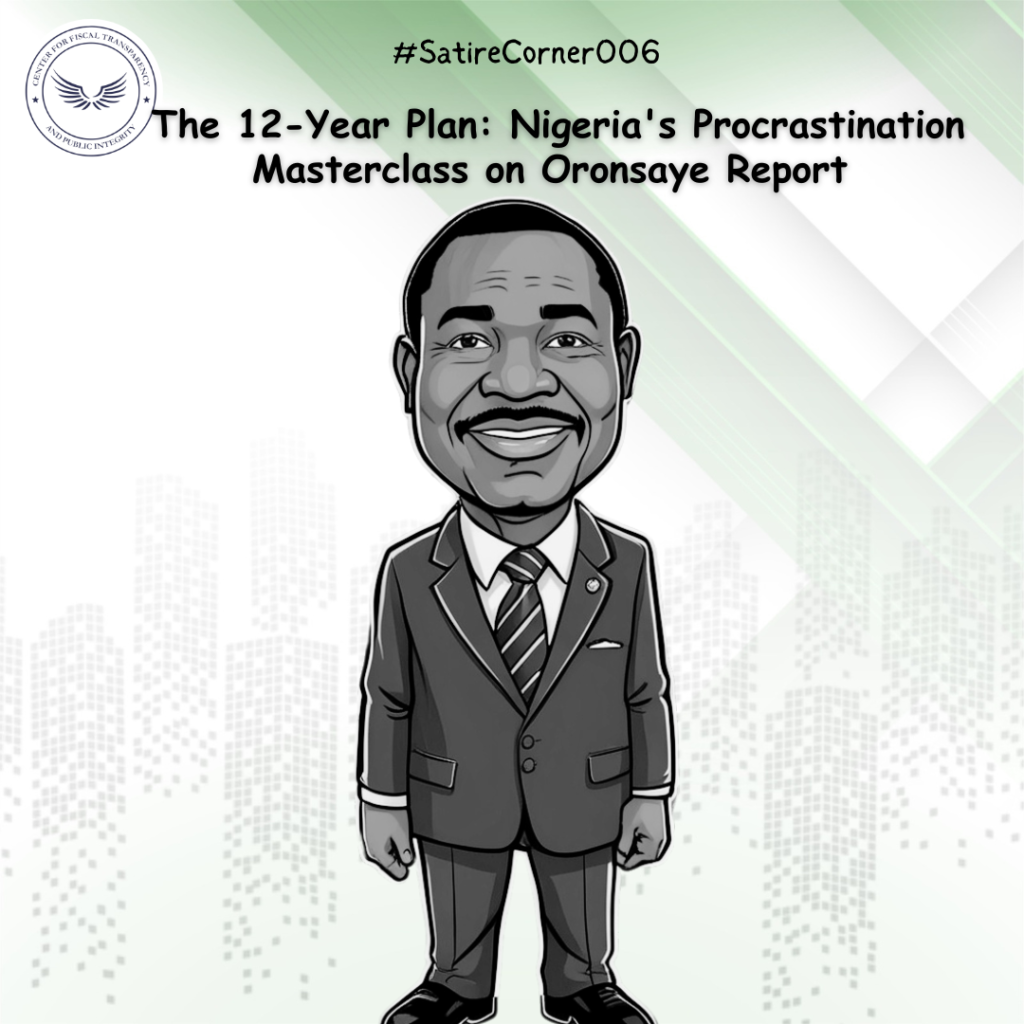
Let’s kindly look at the long-awaited implementation of the Oronsaye Report, which stands as an excellent pointer to the Nigerian government’s knack for punctuality. Who needs timely reforms when you can simply wait 12 years? President Bola Tinubu’s directive on February 26, 2024, to dust off this bureaucratic relic is nothing short of a masterclass in procrastination.
Imagine the delight of discovering that the number of federal parastatals has skyrocketed from 541 to a staggering 1,316 since the report’s inception in 2011. It’s almost as if the previous governments took Oronsaye’s recommendations as a dare to generously triple their inefficiencies. After all, why merely cut costs when you can bloat the payroll and balloon the budget?
Speaking of budgets, the 2024 appropriation bill, a generous N28.7 trillion, allocated a whopping 43 percent to non-debt recurrent expenditure. And in a delightful twist of irony, the personnel cost for Ministries, Departments, and Agencies (MDAs) is pegged at N4.9 trillion. Efficiency at its finest!
The report suggested merging the CCB, EFCC, and ICPC to streamline operations. But why follow through when you can maintain a trinity of agencies, each with its own hefty budget? EFCC gets N76.586 billion, ICPC N14.525 billion, and CCB N49 billion – because redundancy is evidently the new efficiency.
Also, combining NTDC, NCAC, and NOA into one mega-agency is the pinnacle of cost-cutting genius Nigeria has been waiting for, because nothing boosts efficiency like mixing up tourism, arts, and national orientation into a single bureaucratic cocktail.
And let’s not forget the no-job-loss-palliative promise. It’s almost endearing how the government assures workers of job security while plotting to merge and scrap agencies.
So now, the government has finally formed a 10-member committee to address the decade-old bureaucratic nostalgia. Perhaps more committees will be created to tackle the recommendations. So here we are, 12 years later, with a government ready to “scratch the surface” and call it reform.
5. The Kingdom of the Super Agencies: When Regulators Become Tycoons
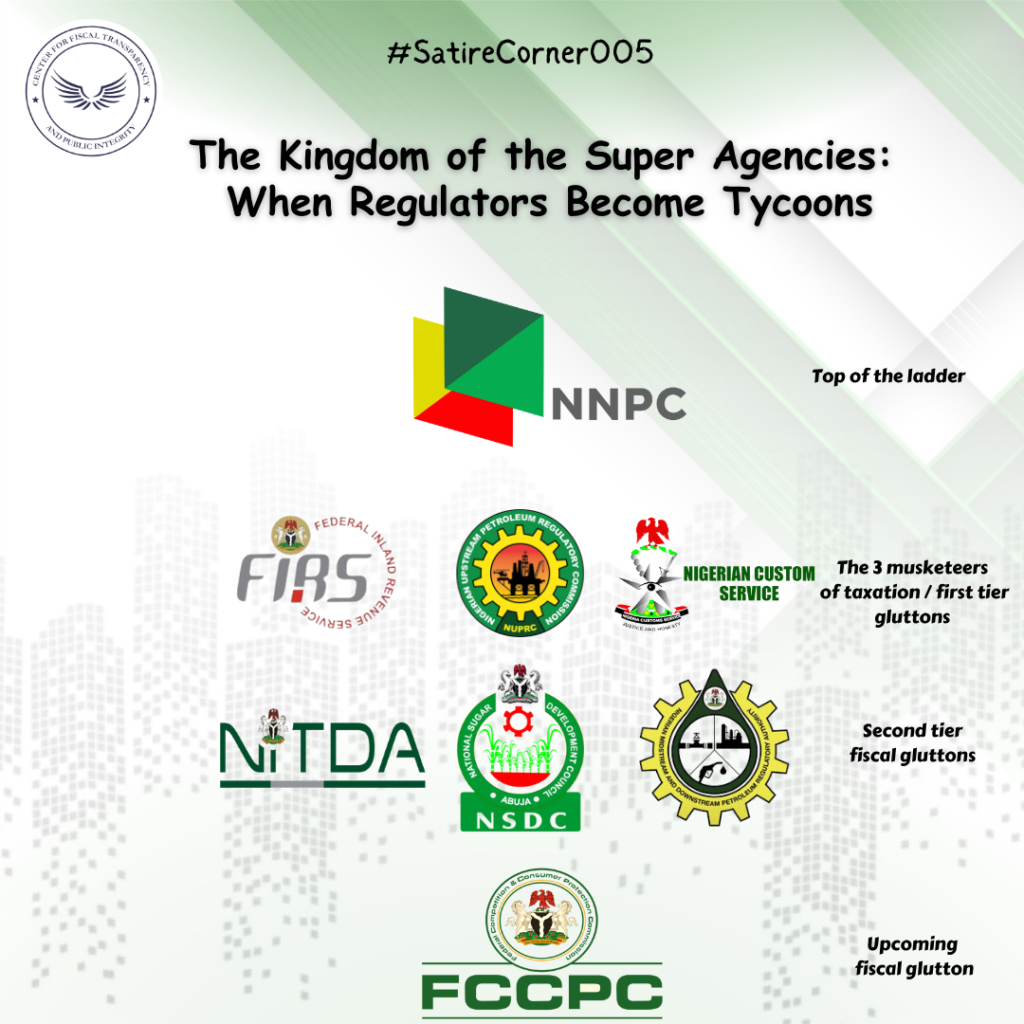
Nigeria, the land of endless opportunity -especially if you’re a government agency with a knack for collecting fees, levies, and fines. Here, the true mark of success is not in public service or national development, but in how much revenue one can squeeze from businesses and citizens. The more money you can extract, the more you can spend, and if the law allows it, why not?
Let’s look into this fascinating world of Nigerian super agencies, where revenue collection and profligacy go hand-in-hand, creating a cycle so absurd, it might just be genius.
First up, we have the Federal Inland Revenue Service (FIRS), the Nigerian Customs Service (NCS), and the Nigerian Upstream Petroleum Regulatory Commission (NUPRC). These three musketeers of taxation are the epitome of fiscal gluttony. In 2024, they are set to collectively hoard N861.49 billion. For context, this is more than the National Judicial Council and the National Assembly combined. Imagine a tax collector who earns more than the judges who rule on tax disputes and the legislators who write tax laws. The irony is delicious.
Then there’s the Nigerian National Petroleum Corporation Limited (NNPCL), which has turned into a cash-sucking behemoth. Scheduled to rake in N776.45 billion in 2024, this entity alone will receive more than 470% of the National Judicial Council’s budget. It’s like giving your vacuum cleaner a separate bank account and watching it accumulate more wealth than the house it cleans.
Our heroes in the second tier of fiscal gluttony include the National Information Technology Development Agency (NITDA), the National Sugar Development Council (NSDC), and the Nigerian Midstream and Downstream Petroleum Regulatory Authority (NMDPRA). These agencies are the embodiment of middle-management excess, siphoning funds from specific revenue streams they don’t even generate. It’s the bureaucratic equivalent of getting paid just for showing up.
The crème de la crème, however, are the third-category agencies like the Federal Competition and Consumer Protection Commission (FCCPC). In 2023, FCCPC generated N56 billion, mostly from penalties against businesses. They graciously remitted N22.4 billion to the federal government, keeping the lion’s share for themselves. From raising N154 million in 2017 to N33.6 billion in 2023, this growth rate would make any startup founder weep with envy.
But why stop there? These agencies have mastered the art of lavish spending. They allocate billions for office furniture, staff retreats, and long service awards. The FIRS plans to spend N26.52 billion on new offices, because clearly, tax collection needs the ambiance of luxury.
One might think that such blatant excess would attract scrutiny and reform. But in Nigeria, the answer to a super agency’s bloat is to create more super agencies. Each new entity clamors for its piece of the revenue pie, perpetuating a cycle of fiscal absurdity that is as hilarious as it is tragic.
In conclusion, Nigeria’s super agencies are a solid proof to how creative accounting and legislative loopholes can transform public service into a lucrative enterprise. They remind us that in the exciting corridors of Nigerian bureaucracy, the true path to prosperity lies not in innovation or efficiency, but in mastering the fine art of collecting and spending other people’s money.
Welcome to the Nigerian Mirage, where the road to fiscal heaven is paved with public fund, and the potholes are lined with gold.
4. The White Lion’s Dance with the EFCC
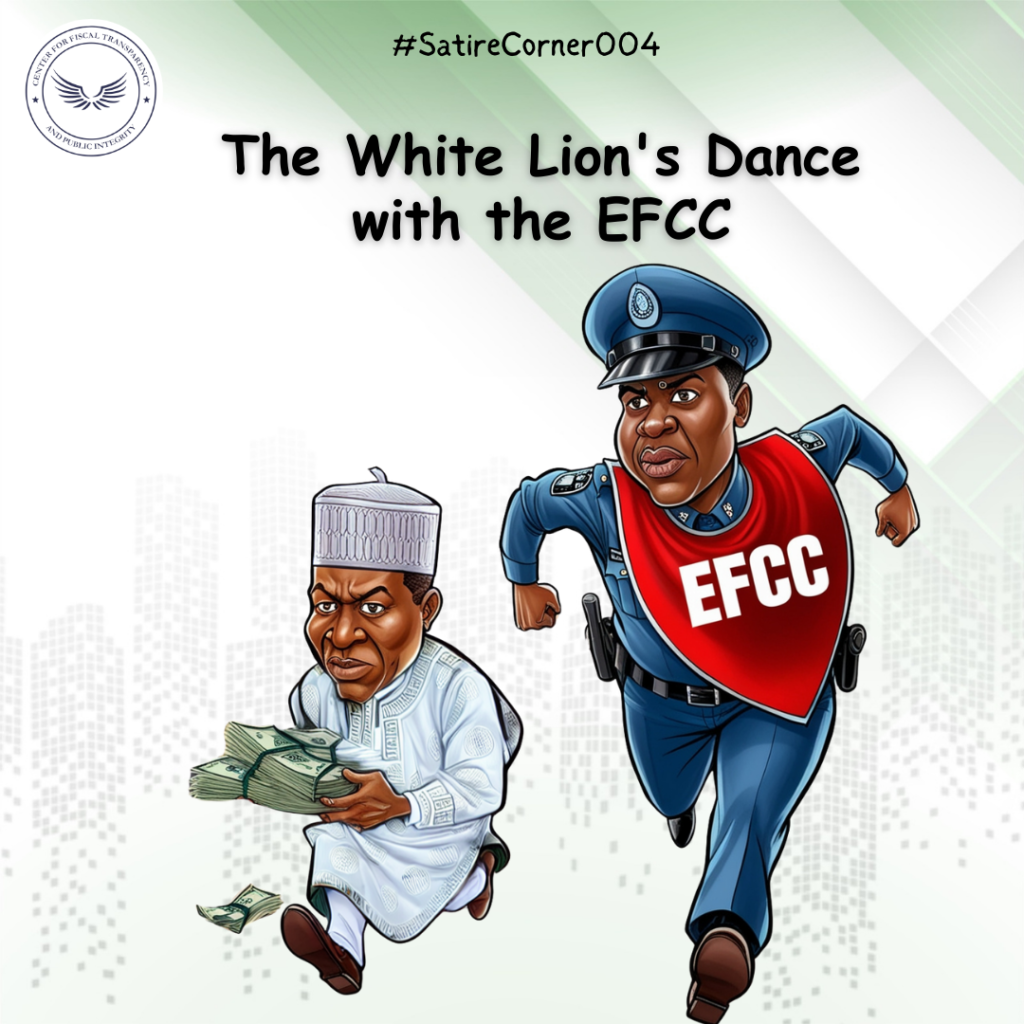
The former governor of Kogi State, or more precisely, the former White Lion of Kogi, Alhaji Yahaya Bello, has recently managed to turn a serious corruption charge into a riveting reality show.
The Economic and Financial Crimes Commission, with its noble mandate to fight corruption, finds itself in a bizarre dance-off with the self-describing Lion, a man whose tenacity for evasion could give Olympic sprinters a run for their money.
The saga unfolded like a Nollywood thriller, with Bello slipping through the EFCC’s fingers at his opulent residence in Abuja. The plot thickened as Bello, accused of laundering a staggering N80 billion, moved from court to court, trying to evade justice with the grace of a ballet dancer.
Maybe his bold escapades made him think of himself as a White Lion, though a ‘White Rabbit’ would be more fitting given his penchant for running, because despite the EFCC with an abundance of operatives besieging his house, only for him to vanish like smoke, the agency’s expertise is somewhat stretched thin.
Amidst this chaos, one can’t help but marvel at the irony. The EFCC, guardian of Nigeria’s anti-corruption crusade, found itself outwitted by a former governor playing hide-and-seek. But the struggle continues, with each side perfecting its role in this tragicomic saga of Nigerian politics.
Now, as the anti-graft agency’s Chairman has pledged to bring him to justice, one has to admire Bello’s audacity. After all, who knew fighting corruption could be this entertaining?
#satirecorner
3. The $75m Training for Dummies: Abuja Metro Rail Edition
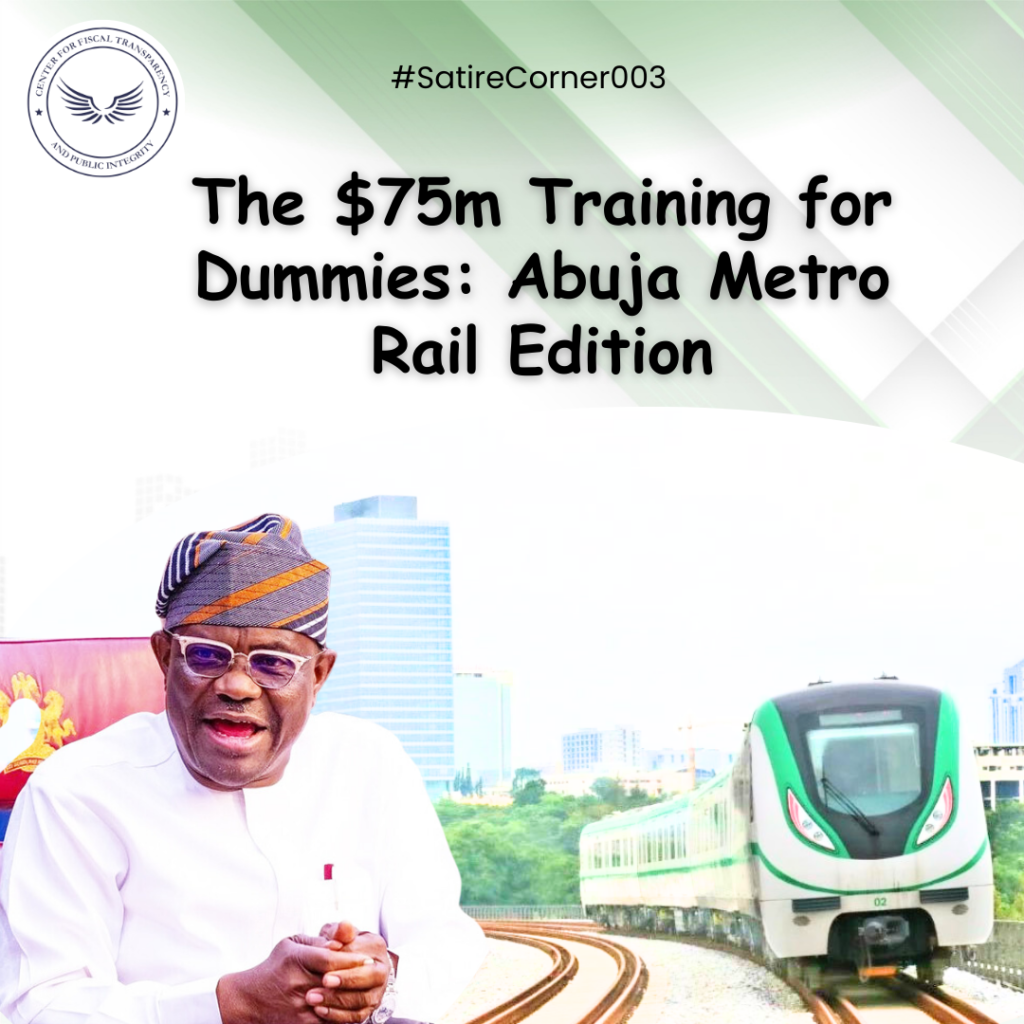
As usual, here comes another story of Nigerian leaders’ dubious extravagance. We are talking about the noble endeavor of training personnel for the Abuja Light Rail project at only $75 million, a mere pittance compared to the original $128 million.
Surely, training Nigerian personnel to oversee railway signals at 12 stations must be akin to teaching rocket science. Perhaps, it’s because they need to master the ancient art of turning trains into spaceships.
Minister Wike’s Herculean effort to cut down the cost to $75 million is nothing short of legendary. One can only marvel at the complexity of the additional work required. After all, cleaning up 12 stations must be as arduous as scrubbing the Great Wall of China with a toothbrush.
Meanwhile, the military’s reluctance to share land in Maitama 2 District is the plot twist we didn’t see coming. Their steadfast grip on barracks ensures civilians remain at bay, thus keeping the budget a cool N1.15 trillion.
And so Wike’s promise to negotiate with the military, because, of course, diplomacy is always easier than simply building elsewhere – adds another layer to this epic saga. A true testament to the complexities of urban development in Nigeria, especially when politics denies transparency a chance!
2. Emefiele: The Nigeria’s Picasso of Paper Money
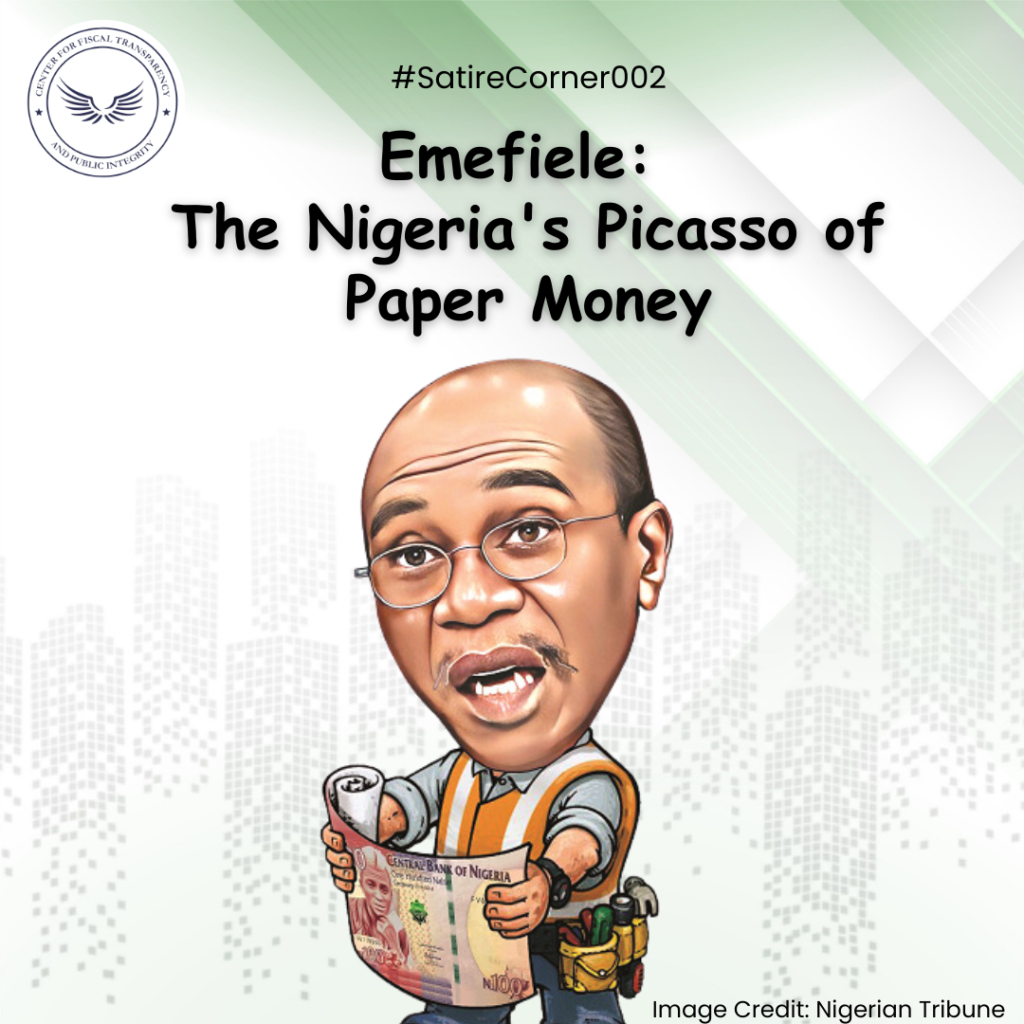
One of the most popular symphonies of corruption recently played out in Nigeria’s apex bank, CBN, where after a series of allegations that trailed its immediate former Governor, Godwin Emefiele, Nigerians woke up to another dizzying shock.
With a flourish of his pen, Emefiele allegedly orchestrated the printing of N684.5 million fresh naira notes using N18.96 billion. You heard it right. It means using N18.96 million to print cash that’s of 27000% less value.
But, well, justice has prevailed as the honorable court granted our fiscal hero bail to the tune of a mere N300 million. A small price to pay for a man of such distinguished pedigree, wouldn’t you agree?
The allegation, whether true or false, isn’t surprising as Emefiele is not merely a one-hit wonder. He has a repertoire of charges against him that would make even the most audacious embezzler blush with envy. From breaching court orders to disobeying the sacred directives of the Central Bank Act, Emefiele’s portfolio of alleged offenses reads like the greatest compilation of corruption.
And let us not forget the pièce de résistance: the naira swap policy, a stroke of genius that transformed the nation’s currency into a political pawn in the game of electoral chess. You know, the lengths one would go to in order to combat vote buying.
Yet amidst the chaos and controversy, one thing remains certain: in the theatre of Nigeria’s public management where honesty is a foreign concept and integrity is as elusive as a pot of gold at the end of a rainbow, Emefiele’s legacy as the Picasso of Paper Money will surely endure for generations to come.
- Three in-laws and a sibling in court

In the grand spectacle of Nigerian politics, where honesty and integrity are as rare as unicorns, we witness yet another riveting episode: A father, daughter and son-in-law recently gathered in court over corruption charges. The family that embezzles together, stays together, right?
Our protagonist, the ‘illustrious’ former minister of aviation, Hadi Sirika, stands tall amidst the corruption allegations, like a phoenix rising from the ashes of ethical bankruptcy. His daughter and son-in-law, Fatima and Jalal, charmingly joined the fray, completing the scheme of familial fiscal impropriety. It’s almost heartwarming, isn’t it?
They weren’t content with merely fleecing the nation; they had to spice things up with some consultancy roles in the failed Nigerian Air saga. Because nothing screams professionalism like hiring your own kin for a national project destined for failure.
Allegations, you say? Oh, just a trifling matter of consultancy roles in the grand spectacle of Nigerian Air’s spectacular nosedive into oblivion. It seems that even in the noble pursuit of a national carrier, there’s always room for a bit of family business on the side.
We thought we had seen it all until the EFCC unearthed another family member to complete the cast. The former aviation minister’s younger brother, Ahmad Sirika, and his company, Enginos Nigeria Limited, were involved in a staggering N19.4 billion fraud case. With contracts allegedly funneled to a family-owned enterprise, it seems the ties of blood run deep in this tale of financial folly.
So, let us raise our glasses to this illustrious trio, plus 1, and probably others, whose exploits remind us that in the grand opera of life, one must always have a few in-laws in court to keep things interesting.