

Political Finance Integrity
Political Finance Integrity (PFI) monitors and estimates campaign expenditure from open sources, so that spending by parties and candidates can be compared with what the law permits and what is officially reported.
The Problem It Addresses
The Electoral Act sets ceilings on campaign spending and requires parties and candidates to report it. In practice little is disclosed in a form the public can check, and what is spent on rallies, vehicles, advertising and inducements is visible mainly through press reporting and observation. Undisclosed political finance creates obligations that are later repaid through contracts and appointments.
What the Platform Contains
- National dashboard. Reviewed spending by state, party and month.
- Candidates and parties. Records linked to each candidate and party, with spending set against the statutory ceiling for the office.
- Rallies and rally forensics. Costed records of campaign rallies and events.
- Advertising tracker. Political advertisements drawn from the Meta Ad Library.
- Vote buying and compliance. Reviewed reports of inducements, and a record of compliance with the requirements of the Independent National Electoral Commission (INEC).
- Evidence register. Every item with its source, its evidence tier and its review status.
- Knowledge center and methodology. Background material and a full account of how figures are produced.
How Figures Are Produced
Every figure about a person, party or organization comes from an item that carries a source link, and it counts toward a total only after a reviewer has checked it against that source. Items are graded in five evidence tiers, from documentary records such as INEC filings and court records, down to unverified public submissions. Items awaiting review are labeled as such and excluded from every total.
The spending estimate has two parts. Documented spending is naira amounts quoted in reviewed reports. Modeled spending is an estimate, shown as a range, for rallies costed by event class and for vehicles and goods valued at sourced unit prices.
A modeled estimate of observed spending is not a reported figure. A reviewed record is not an independently audited one. And neither is a finding of wrongdoing: spending above a ceiling on this record is a matter for the electoral commission to examine, not a conclusion that an offence has been committed.
Disclosure and Corrections
The platform publishes its methodology and accepts correction requests from any party, candidate or member of the public who believes a record is wrong.
Record of Activity
- August 2026Paper on nomination fees, party primaries and the pre-campaign finance gap published.
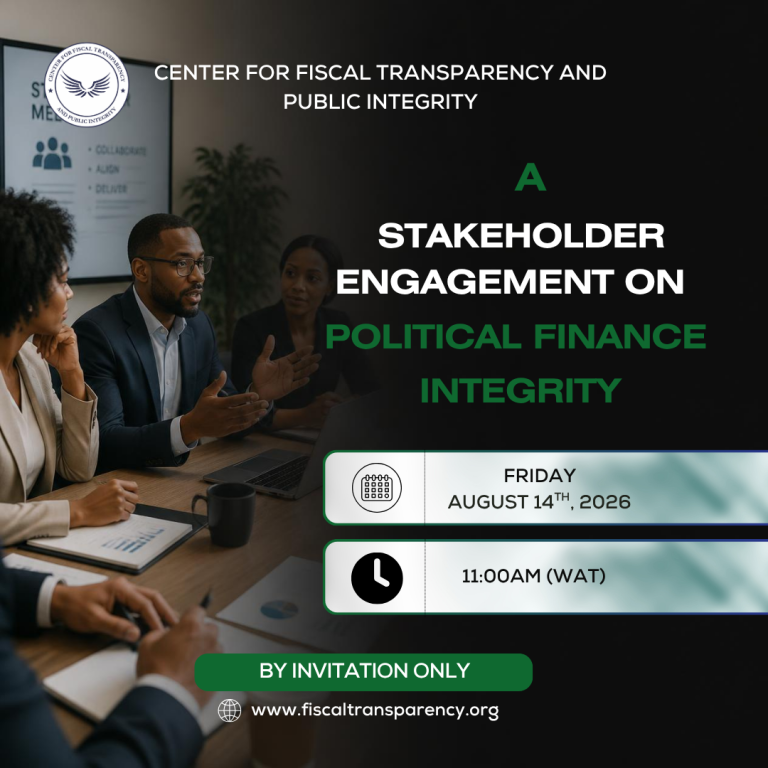
- 14 August 2026Stakeholder engagement and demonstration of the platform. Read the Report
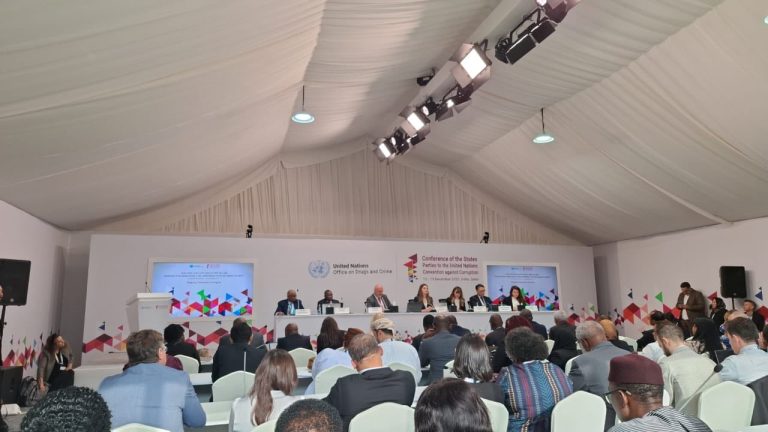
- December 2025The Center takes part in discussions on political party financing at the eleventh Conference of the States Parties to UNCAC in Doha. Read the Report
Latest on This Project
 News13 August 2026
Stakeholder Engagement on Political Finance Integrity
 News15 December 2025
The Center Participates in Critical Discussions on Political Party Financing at the 11th Session of the Conference of States Parties to UNCAC (COSP11) in Doha, Qatar
 X Space16 February 2023
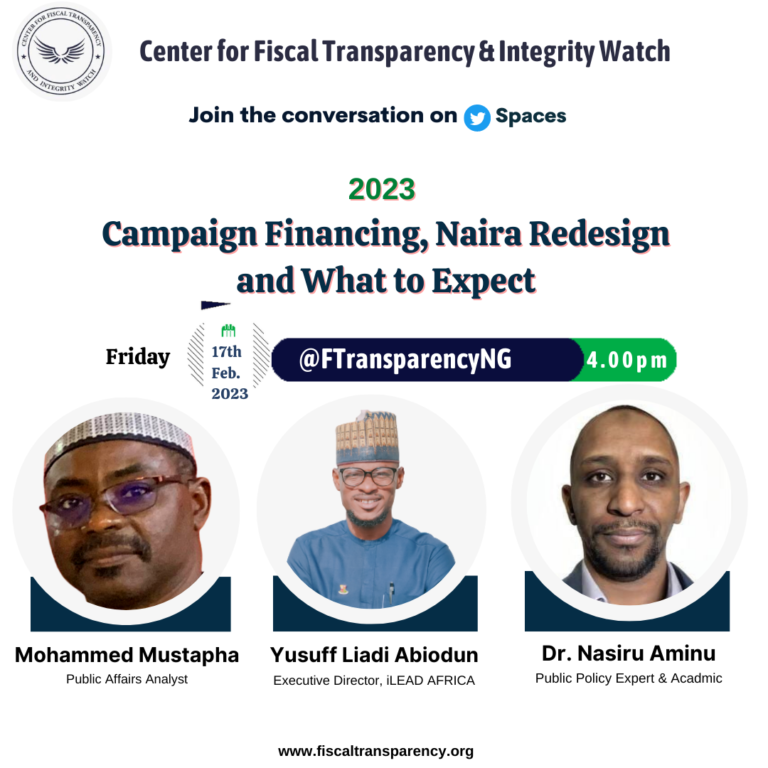
2023: Campaign Financing, Naira Redesign and What to Expect
Publications and Supporting Documents
Regulating the Pre-Campaign Finance Gap: Nomination Fees, Party Primaries, and Electoral Transparency in Nigeria
Questions, Corrections and Engagement
To ask about this work, to report an error or to discuss collaboration, write to mail@fiscaltransparency.org.